

“What does a dozen roses cost?”
North of Da Lat, where hills are combed with fields and rows of greenhouses, I watched workers shovel imperfect roses into the gutter. Scarlets, creams, and coral pinks slid like confetti toward the grates. In a region rich with beauty, the excess became waste. The question lingered: when we live surrounded by abundance, do we forget the worth of what we hold?
The flowers were not ugly. They were not diseased or ruined. They simply failed the standard—stems a half inch short, petals faintly bruised, blooms a day too open. In a market flooded with perfection, near‑perfection had no place. So out they went, tossed by the armful into the street, trampled by motorbikes, and swept away by the afternoon rain. In a region that exports beauty to the world, beauty itself had lost its price.
In Matthew 13:45–46, Jesus tells of a merchant who, upon finding one pearl of great value, sells all to possess it. The emphasis is recognition. The merchant knew value when he saw it. He did not mistake the pearl for a common stone, nor ignore it because he already owned other jewels. He understood what stood before him and reordered his life accordingly.
The same discernment is required of us. We live where Bibles line shelves, sermons stream on demand, and gathering for worship requires no risk. These are not lesser pearls to discard in search of something more. They are treasure—access to the Word, freedom to assemble, liberty to proclaim Christ openly. The danger is not lack but blindness. Abundance can dull the eye. What costs us nothing can feel like nothing. Here, where a single study Bible is requested for years and where believers shift locations daily to avoid notice, the worth of what we take for granted comes into sharp relief.
The merchant sold all. We are not called to discard what we have, but to steward it with gravity—to open the Word as though it were costly, to gather as though it were rare, to teach and be taught as though each moment of freedom were a gift that might not last. For many, it does not.
When abundance becomes the norm, value thins. We hold freedoms that many here cannot assume: to gather, to sing, to open a Bible without fear. We possess shelves of tools and multiple translations. Yet surplus can dull hunger. The roses that did not make market became trash; our spiritual riches risk the same quiet discard. “The law of your mouth is better to me than thousands of gold and silver pieces” (Psalm 119:72, ESV).
The church in the modern West stands in peril of losing sight of the treasure entrusted to it. We hold the Word of God—Scripture that is θεόπνευστος, God‑breathed (2 Timothy 3:16, ESV)—profitable for teaching, for reproof, for correction, and for training in righteousness. This is not a mere archive of ancient texts. It is the living voice of God, preserved across centuries, translated into our language, available on shelves and devices. Familiarity, however, breeds complacency.
We have possessed this treasure so long that we often try to dull its edge when it cuts deeply. Where Scripture convicts, we soften; where it is clear, we revise; where it demands, we negotiate. Yet the Word is “living and active, sharper than any two‑edged sword” (Hebrews 4:12, ESV). When piercing grows uncomfortable, we reach not for repentance but for revision.
This is abundance unguarded. We neglect what we do not fear losing. We devalue what costs us nothing. Here in Vietnam, a believer will guard a single study Bible as a precious possession, memorize passages because access is uncertain, and gather in shifting locations because freedom cannot be assumed. The contrast is stark and convicting. The question is not whether we have been given much. We have. The question is whether we recognize it as much and steward it with the weight it deserves, allowing it to shape us completely, even when it is uncomfortable, without compromise.
These last days have been full—teaching, praying, planning for a February 2026 discipleship seminar, and gathering with a home church to worship and open the Word. We do not remain in one place. Each day requires a new meeting spot. This is not a complaint. It is reality. Ministry moves because it must, and we move with it.
Here, the pearls of great value are not taken for granted. The freedom to gather and worship whenever and wherever—freedoms we assume as baseline—are not afforded to our brothers and sisters. Yet restriction does not diminish faith. It strengthens it, forging conviction. What might feel like limitation has produced clarity of purpose. Every meeting matters. Every act of worship counts. Every moment of fellowship is prized.
This confronts our assumptions. When gathering requires risk, worship cannot be casual, and fellowship must be deliberate, the focus shifts from convenience to communion, from production value to presence. The body gathers not because it is easy, but because it is essential. Joy is not manufactured by polish or performance. It flows from the simple reality of being together in Christ. The question is not whether the music is excellent or the venue comfortable, but whether the Word is opened, Christ is exalted, and the saints are built up. There is a purity here that abundance often obscures.
We have much to learn. Where Sunday feels optional, believers here treasure each opportunity. Where we critique sermons and song selections, they give thanks for the freedom to hear and to sing at all. Where we tire of “church,” they understand it not as an event to attend but as an identity to embody—the ekklesia gathered around the risen Lord. Circumstance has not weakened faith; it has refined it, stripping away what is peripheral and clarifying what is central. In that clarity, there is a joy our convenience has not produced.
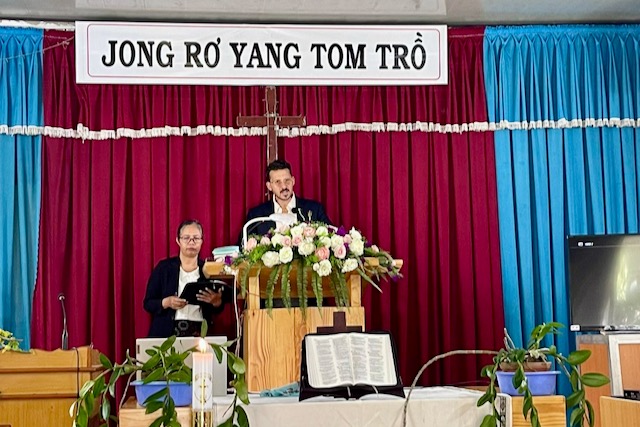
We arrived in Lam Dong on Saturday and began work with ministry partners. Sunday started before sunrise as they picked us up from our homestay for worship with a village home church. I preached on identity in Christ and how baptism marks, in public, a heart already set apart for God. After worship we shared hot‑pot noodles and fish cakes, then gathered at a small coffee shop to share the vision ahead: proximity discipleship that forms people over time and, through 2026 training, identifies leaders ready for cross‑cultural mission across Vietnam.
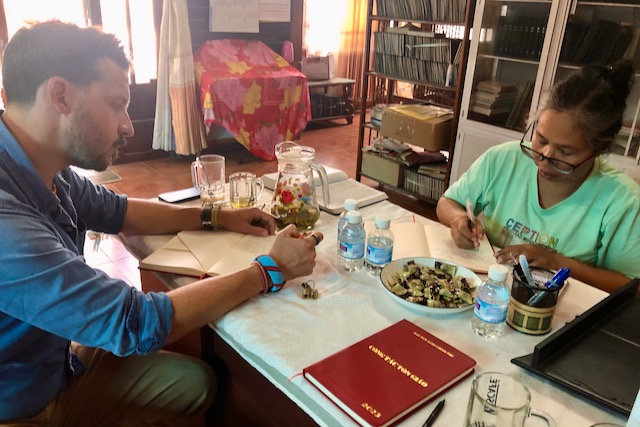
Monday matched the pace. We met at a different home to plan moving pieces for the seminar. The aim is to host twenty pastors and lay leaders from Lam Dong and nearby provinces for five days of intensive training—moving from being disciples to making disciples through presence, and toward mobilization. The curriculum is taking shape, materials are being gathered, and logistics—housing, meals, transport, and security—are being worked through with partners on the ground. The afternoon turned to language—hours of focused work to honor people by speaking with clarity and care.
This week continues the rhythm: student meetings for proximity discipleship, further language immersion, and finalizing what remains for February’s seminar. Each day requires a new meeting spot as we rotate locations for security. This is not a complaint. It is simply the reality of ministry here, and we move with it.
Hold fast to what abundance makes easy to forget: the gift of Scripture in our own language, the freedom to gather without fear, and the ability to sing and pray in public. These are not discarded roses. They are treasures entrusted to us. Let us value the Word and the fellowship of the saints, and let that gratitude move us to intercede for brothers and sisters who hunger for the same access.
The discarded roses of Da Lat warn that abundance without discernment leads to waste. The greater tragedy would be to treat the riches of the gospel—the Word, the assembly, and the freedom to worship—as disposable. They are not. They are pearls of immense worth, entrusted not for comfort alone but for the building up of the body and the advance of the kingdom.
Therefore, let us not grow weary in the freedoms we possess. Let us open the Scriptures with fresh hunger, gather with renewed gratitude, and steward our access as the treasure it is. And as we do, let us remember brothers and sisters here—and in restricted regions worldwide—who press on with joy despite what they lack, who treasure what we often overlook, and who remind us that hardship does not diminish the gospel. It clarifies it.
May we be a people who recognize the value of what we hold, guard it faithfully, proclaim it boldly, and pass it on to the next generation. The abundance we enjoy is not ours to squander. It is ours to steward for the glory of Christ and the good of His church.
In the coming days we will meet with students for proximity discipleship, continue language work, and finalize plans for the 2026 seminar. More details soon—please keep praying for wisdom, steady courage, and open doors.
From one man He made all the nations, that they should inhabit the whole earth; and He marked out their appointed times in history and the boundaries of their lands. God did this so that they would seek Him and perhaps reach out for Him and find Him, though He is not far from any one of us. Acts 17:26-27