
Abram is ninety-nine years old.
Twenty-four years have passed since God first called him out of Ur. Twenty-four years of partial obedience and significant failure — Egypt, where he passed Sarai off as his sister; Hagar, where he and Sarai attempted to engineer the promise through their own means. Twenty-four years of genuine faith stretched thin across seasons that tested it. The promised heir has not come. The land is still populated by Canaanites. The covenant word of Genesis 12 — I will make of you a great nation — looks, from the ground level, like a beautiful promise in the process of being quietly disproven by biology and time.
And then El Shaddai appears.
Not a dream. Not a still small voice. Not a burning bush or a pillar of cloud. The text is plain, and its plainness is the point: the Lord appeared to Abram. Personal. Present. Here, in the tent, in the heat, in the long wait.
What God does in Genesis 17 is not primarily a covenant transaction. It is a portrait. A portrait of how God relates to the people He has chosen — not from a safe distance, not through intermediaries, not after the circumstances have become more favorable. He appears. He speaks. He names. He marks. Four movements. The same four movements He has been making ever since, in every generation, toward every person who will bear the name He spoke to Abram that afternoon.
The Lord appeared to Abram.
This is a theophany — a direct, unmediated appearance of God to a human being. Not a representative. Not a messenger bearing a sealed letter. God Almighty, in person, standing before a man who is ninety-nine years old and has been waiting for a quarter of a century.
The name El Shaddai — God Almighty — appears here for the first time in Scripture, and its first appearance is not in a formal religious setting. It is in a tent, in Canaan, in the ordinary afternoon of a man’s long life. The name carries the weight of sovereign sufficiency: the God who is enough, the God who is not strained by the impossibility of the situation. He does not send a note. He comes.
This is the first panel of the portrait, and it establishes the posture of everything that follows. God pursues personal encounter. He does not manage Abram from a distance, directing outcomes without presence. He appears — because what He wants is not merely Abram’s compliance. He wants Abram himself.
The New Testament does not soften this pattern. It intensifies it — and it does so with a precision that the English translation almost conceals.
The Word became flesh and tabernacled among us (John 1:14). The Greek verb is ἐσκήνωσεν — eskēnōsen — not merely “dwelt” in a general sense, but pitched His tent. The same word family as skēnē, the tent, the tabernacle, the portable dwelling of a people in motion. John is not reaching for a domestic metaphor. He is reaching for the wilderness. He is saying: the God who showed up in Abram’s tent on a dusty plain in Canaan showed up again — in flesh, in transit, joining the pilgrim on the path.
Ger made incarnate — the sojourner God, pitching His tent among sojourners. El Shaddai did not appear to Abram in a temple or a throne room. He appeared in a tent — in the middle of the journey, before the destination had been reached, while the land was still occupied by someone else. And when the fullness of time came, He came the same way: not into an institution, but into the road. Not to manage the pilgrimage from above, but to walk it from within.
The same posture. The same initiative. The same refusal to remain at a distance when presence is what love actually requires.
He still shows up. Not because you found Him. Because He will not stay away.
“Walk before me, and be blameless.”
At first hearing this sounds like a command — a moral threshold Abram must clear before the covenant becomes operative. But listen more carefully to what God is actually saying.
The Hebrew word translated blameless is tamim — whole, complete, undivided. It is the word used of Noah (Genesis 6:9), a man who walked with God in the middle of a generation that did not. It is the word used of the sacrificial animals — not perfect in the sense of flawless, but whole, uncompromised, without the division that makes a thing unsuitable. Tamim does not mean sinless perfection. It means wholeness of orientation: a life in which there is no rupture between the face turned toward God and the life lived before Him.
And the call is to walk before Him — lə-pānay — literally, before My face. Not behind God, following at a cautious distance. Not beside God as a partner negotiating terms. Before His face — in full view, in conscious awareness of His presence, with the settled knowledge that the One who sees everything is watching with attention and with love.
This is an invitation to intimacy, not a precondition for performance. The structure of the verse makes this plain: walk before me and be blameless, that I may make my covenant with you. The covenant is the destination. The walking is the relationship. God wants to be known. He wants Abram — and every person who will bear the name of Abraham after him — to live in conscious, oriented, face-to-face awareness of the God who appeared.
The New Testament completes this image: We all, with unveiled face, beholding the glory of the Lord, are being transformed into the same image from one degree of glory to another (2 Corinthians 3:18, ESV). The veil is gone. The call to walk before His face is unchanged. The Spirit is now the enabler.
He is not asking for your performance. He is asking for your face.
“No longer shall your name be called Abram, but your name shall be Abraham.”
Abram means exalted father. It is a dignified name, a name of standing — the kind of name a family gives a son they expect great things from. Abraham means father of a multitude of nations — av hamon goyim. It is, at the moment it is given, an objectively absurd name. Abram has no children by his wife. He is ninety-nine. Sarai is ninety. The name is not a description of present reality. It is a declaration of future certainty spoken over a man who has no earthly basis for it.
God does not rename Abram because Abram has finally earned a better name. He renames him because God is the kind of God who speaks identities into existence and then backs them with His own faithfulness. The name precedes the reality. The word creates what it declares.
This is the most directly Christological panel in the portrait. When Jesus looks at Simon and says you will be called Cephas — Peter, the rock (John 1:42) — He is doing exactly what God did in Genesis 17: speaking an identity over a person before that identity is visible in them, before the raw material even begins to resemble the finished form. When Paul declares that anyone who is in Christ is a new creation (2 Corinthians 5:17), he is unpacking what Abraham’s new name means for every heir of the covenant by faith (Galatians 3:29). When John promises a new name written on a white stone that no one knows but the one who receives it (Revelation 2:17), he is reading Genesis 17 forward to its final completion.
The name is not our achievement. It is God’s announcement.
You are not who you were. The name has been spoken. Walk into it.
The covenant sign God gives to Abraham is circumcision — a mark inscribed on the body, permanent and personal, carried into every context of life. It does not produce the covenant relationship. It marks it. It declares, in the most irreversible terms, that this person belongs to the God of Abraham.
The New Testament does not abolish this sign. It completes it.
Romans 2:29: Circumcision is a matter of the heart, by the Spirit, not by the letter. The external sign was always pointing inward — toward the mark that matters most, the undivided heart oriented toward God, carrying the sign of belonging at its center. What God always wanted was not a surgically altered body. It was an altered heart.
Romans 7:6: We are released from the law so that we serve in the new way of the Spirit. The set-apart life is not an obligation we strain toward. It is a reality the Spirit produces in those who have received the new name and are learning to walk before His face.
Colossians 2:11–12: In Christ we have been circumcised with a circumcision made without hands — by the putting off of the flesh, by the circumcision of Christ, in burial and resurrection with Him in baptism. The sign is fulfilled. The set-apart life is not merely commanded. It is enabled.
To be set apart is not to be removed from the world. It is to be sent into it as a marked person — someone who belongs to God, whose heart bears the covenant sign, who carries in the body the dying of Jesus so that the life of Jesus may be manifest (2 Corinthians 4:10). Abraham was not set apart so that he could withdraw into religious isolation. He was set apart so that in him all the families of the earth would be blessed (Genesis 12:3).
The calling has not changed. The marked person is always sent toward the nations.
Genesis 17 is not a chapter that belongs to the ancient world.
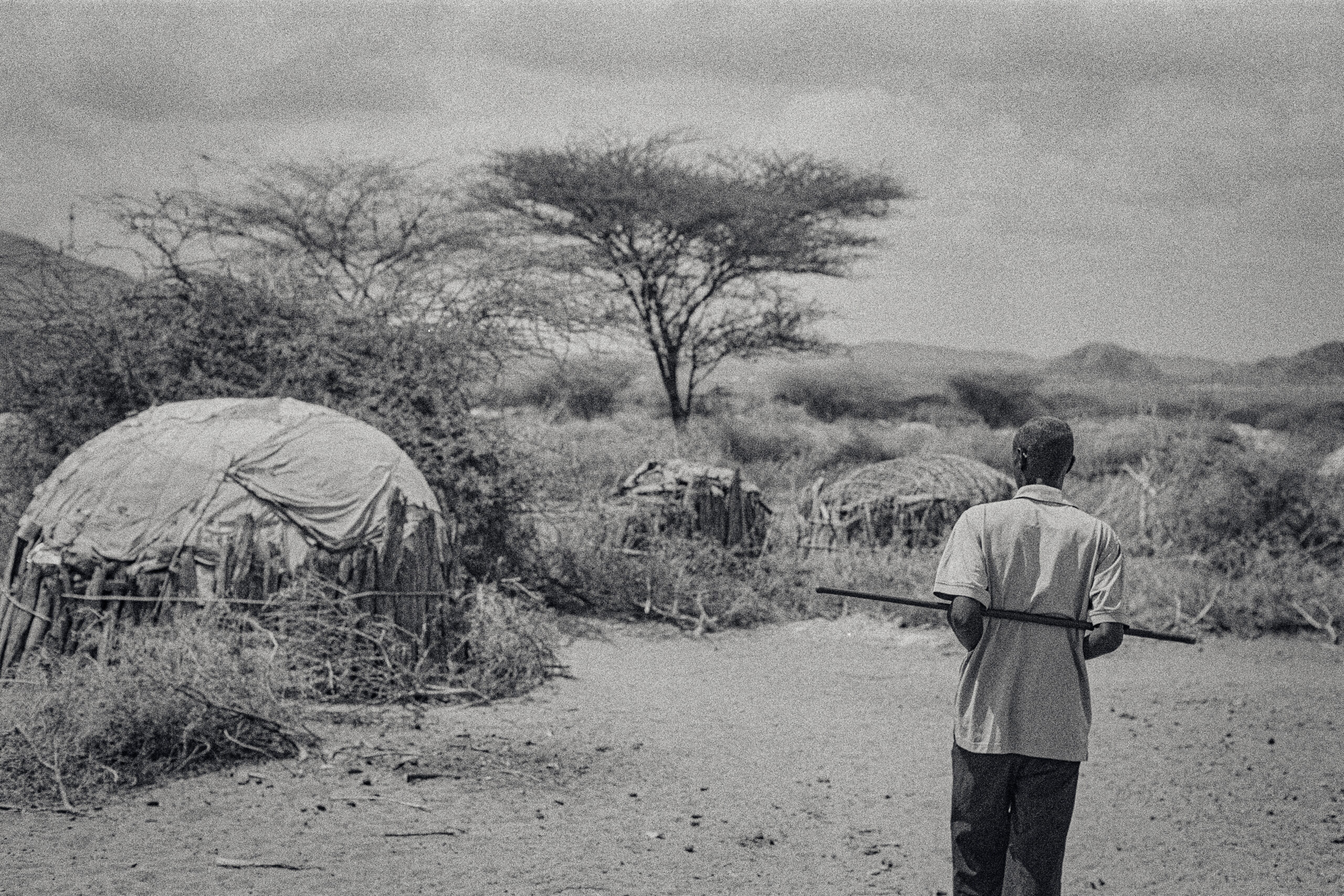
In a few weeks I will be on the ground in Marsabit, in the lowland bush country of northern Kenya, at a youth soccer tournament that draws secondary students from villages across the region — young people who have grown up in one of the most underserved and underreached areas of the African continent. I will be bringing them this message. Not as a theological exercise. As the most important thing I know how to say.
El Shaddai appears. He shows up personally — not managed from a distance, not through intermediaries, not after you have sorted yourself out. He comes.
He calls you to walk before His face — not to perform for His approval, but to live in the conscious, unhurried awareness that you are seen by One who watches with attention and with love.
He gives you a name you did not earn and cannot lose. In Christ, you are a new creation. The old has passed away. The name is spoken. It does not wait for you to grow into it before it becomes real.
He marks you and sends you — not to remove you from the world, but to send you into it as a person who belongs to Him. Set apart. Bearing the covenant sign on your heart. Carrying the life of Jesus into the places you go.
Those students on a red-dust pitch in northern Kenya need to hear exactly what Abram heard on that dusty plain in Canaan. The God who appeared to a ninety-nine-year-old man with an impossible name is the same God who is appearing, right now, to a generation that has never heard His name spoken over them.
If this message has landed on you — if you have read this far and recognized something of your own story in Abraham’s — I want to invite you to be part of what happens in Marsabit. The ministry is lean and direct: the field, the students, the Word. Every dollar goes straight to the work.
Give toward the Marsabit Youth Soccer Tournament Ministry
Genesis 17 is not a museum piece. It is a living portrait of the God who still appears, still calls, still renames, still marks His people for a purpose that extends beyond them to the nations.
If you are in Christ:
El Shaddai has appeared to you — in the Word, in the Spirit, in the face of the Son. Personal.
He has called you to walk before His face — tamim, whole, undivided, facing one direction. Intimate.
He has given you a name you did not earn: child of God, heir of Abraham, new creation. Identity.
He has marked your heart with the covenant sign of the Spirit and sent you into the world as a person who belongs to Him. Set Apart.
This is what God did with a ninety-nine-year-old man on a dusty plain in Canaan. This is what He is doing with you.
I have watched it happen — in the lowland bush country of northern Kenya, at a late-night shepherd fellowship, with a man named Lentilai.
I first met him in August of 2022, during our first Marsabit Soccer Ministry, serving alongside Rev. David. Among the hardest to reach in Marsabit are the shepherds. By necessity, they are in the fields with the herds from early morning until long after dark, absent from village life for the whole of the day. We found a way to reach them: late-night fellowships, held after the animals were settled, in the hours when they could finally stop and sit. On one of those nights, Lentilai appeared.
He was seated in the back, arms crossed, eyes dark — the look of a man who has not yet decided whether he has any business being in the room. Lentilai had recently aged out of the Moran — the warrior age-grade of his people — a season of life defined by service, discipline, and a fiercely collective identity. He had finished that season and was still grappling with it, still working out who he was now that the role that had structured him was gone.
That night I shared the story of the Shepherd who leaves the ninety-nine to search for the one — how He carries us back to Himself, not with the rod, not out of anger, but with intimacy. Not because we earned the search. Because He will not let us stay lost.
When we gave an opportunity to respond to the Gospel at the end of the message, Lentilai was the first to come forward. He received Christ that night, and his life was forever changed.
In the years that followed, I watched him grow — in faith, in responsibility, in his service within the church. The following year, he was one of four men who traveled from Marsabit to Olderkesi to attend a seminar of teachings that Rev. David and I gave for the Olderkesi Africa Gospel Church. When we launched our Proximity Discipleship training for bush pastors in Marsabit this past May, Lentilai was a natural choice for inclusion.
What I did not expect was what happened on the last day of that seminar.
We asked each participant to name one person they were going to disciple. When Lentilai’s turn came, he hesitated. And then he said he could not name anyone. He went on to confess — before his brothers in the faith, without deflection — that he had strayed from the church in recent months. That he had taken up drinking again. That he had been quarreling with his wife. That most of this had been kept carefully hidden from the people who knew him best. He said he could not disciple anyone, because he needed first to become a better disciple himself.
That moment of honesty — that willingness to be known by the God who already knew, and to let that knowing break the surface — is what all four panels of Genesis 17 look like in a human life. El Shaddai appeared to Lentilai in the back of a late-night shepherd fellowship, not after he had sorted himself out. He called him to walk before His face — tamim, undivided, nothing hidden. He gave him a name he had not earned: beloved, chosen, new creation. And He is now doing the slow, faithful work of marking his heart and sending him into the world as a man who belongs to God.
Lentilai is not finished. But he is walking in the right direction — and he is doing it with his face toward the One who found him.
Walk before Me. Be tamim. You are Abraham’s heir. The sign is on your heart.
In Christ,
Mathew
Beehive Global Collective
From one man He made all the nations, that they should inhabit the whole earth; and He marked out their appointed times in history and the boundaries of their lands. God did this so that they would seek Him and perhaps reach out for Him and find Him, though He is not far from any one of us. Acts 17:26-27