
“Hezekiah sent to all Israel and Judah, and wrote letters also to Ephraim and Manasseh, that they should come to the house of the LORD at Jerusalem to keep the Passover to the LORD, the God of Israel.”
— 2 Chronicles 30:1 (ESV)A King Who Sends the Invitation
A restored door is not the end of the story. Sometimes it is where the invitation begins.
What Hezekiah does next is remarkable. He sees the LORD restoring worship in Jerusalem, and he does not treat that work as something to keep within the city walls. The kingdom is fractured. The northern tribes are scattered and estranged from Jerusalem. Hezekiah responds by sending the invitation beyond the people already gathered around him.
He writes to Ephraim and Manasseh and sends couriers throughout Israel and Judah. He calls the people to return to the LORD and come to Jerusalem for Passover. He is acting missionally: carrying the invitation across a divided kingdom, toward people who might otherwise remain outside the renewed worship taking place in Jerusalem. Hezekiah does not wait for the scattered to discover the feast on their own. He makes sure they know they are being called.
That is the movement of this chapter. The king sees what the LORD is doing and understands that more people need to be invited to participate. The feast is not diminished by becoming an invitation. It is the very reason the invitation travels.
“So the couriers went throughout all Israel and Judah with letters from the king and his princes, as the king had commanded, saying, ‘O people of Israel, return to the LORD, the God of Abraham, Isaac, and Israel, that He may turn again to the remnant of you who have escaped from the hand of the kings of Assyria. Do not be like your fathers and your brothers, who were faithless to the LORD, the God of their fathers, so that He made them a desolation, as you see. Do not now be stiff-necked as your fathers were, but yield yourselves to the LORD and come to His sanctuary, which He has consecrated forever, and serve the LORD your God, that His fierce anger may turn away from you. For if you return to the LORD, your brothers and your children will find compassion with their captors and return to this land. For the LORD your God is gracious and merciful and will not turn away His face from you, if you return to Him.’”
— 2 Chronicles 30:6–9 (ESV)The letter does not conceal the truth. It names the unfaithfulness that brought judgment. But judgment is not the last word in it. The call is to return to the LORD, whose character is gracious and merciful. The couriers carry both truth and hope: come back to the God who has not ceased to call His people home.
That invitation meets different responses.
“So the couriers went from city to city through the country of Ephraim and Manasseh, and as far as Zebulun, but they laughed them to scorn and mocked them. However, some men of Asher, of Manasseh, and of Zebulun humbled themselves and came to Jerusalem.”
— 2 Chronicles 30:10–11 (ESV)Some laugh. Some humble themselves and come. The chapter does not pretend that every invitation will be welcomed, or that a faithful messenger can control the response. Hezekiah sends the word; the people answer as they will. Yet the refusal of some does not cancel the welcome of those who come.
Mission is not the art of guaranteeing a response. It is the work of carrying a true invitation beyond the boundaries of the familiar, trusting God with what follows. Hezekiah’s couriers do not go only to the people already gathered in Jerusalem. They go toward the scattered, the distant, and the unlikely. The feast is not merely for those who know where the doors are. The king sends word so that those beyond the center can hear the call and come.
When the Unprepared Arrive
The people who make the journey do not all arrive in the condition the law required. The Chronicler does not hide this complication, and Hezekiah does not treat it lightly.
“For a majority of the people, many of them from Ephraim, Manasseh, Issachar, and Zebulun, had not cleansed themselves, yet they ate the Passover otherwise than as prescribed. For Hezekiah had prayed for them, saying, ‘May the good LORD pardon everyone who sets his heart to seek God, the LORD, the God of his fathers, even though not according to the sanctuary’s rules of cleanness.’ And the LORD heard Hezekiah and healed the people.”
— 2 Chronicles 30:18–20 (ESV)This is not a casual dismissal of holiness. The text is explicit: the people had not prepared according to the sanctuary’s requirements. Hezekiah does not rename the problem or pretend the distinction does not matter. He prays. He asks the good LORD to pardon those whose hearts are set on seeking Him, even as their arrival falls short of the prescribed preparation.
Then comes the sentence that holds the scene together: “And the LORD heard Hezekiah and healed the people.” The king’s intercession does not replace the LORD’s mercy. It appeals to it. And the people who came from beyond the expected circle are not sent away; they are met by the God they came seeking.
There is a difference between lowering the call and making room for people who are still on the way toward it. Too often, we lower the bar in the name of welcome, as though mercy required us to take holiness less seriously. Hezekiah does not say that preparation was meaningless. He asks the LORD to receive those who have come with imperfect preparation and a heart turned toward Him. The story holds welcome and holiness together: the invitation draws people toward the feast, and the feast gathers them before the LORD.
Hezekiah stands between the unprepared worshippers and the God they have come to seek. He is a king, not the final mediator; his prayer is a shadow of a greater intercession still to come. But the moment lets us see the shape of a faithful leader: not one who guards the holy by keeping the seeking at a distance, nor one who treats the holy as though it has no claims, but one who brings the need of the people before the LORD and asks for mercy.
The Invitation from Olderkesi
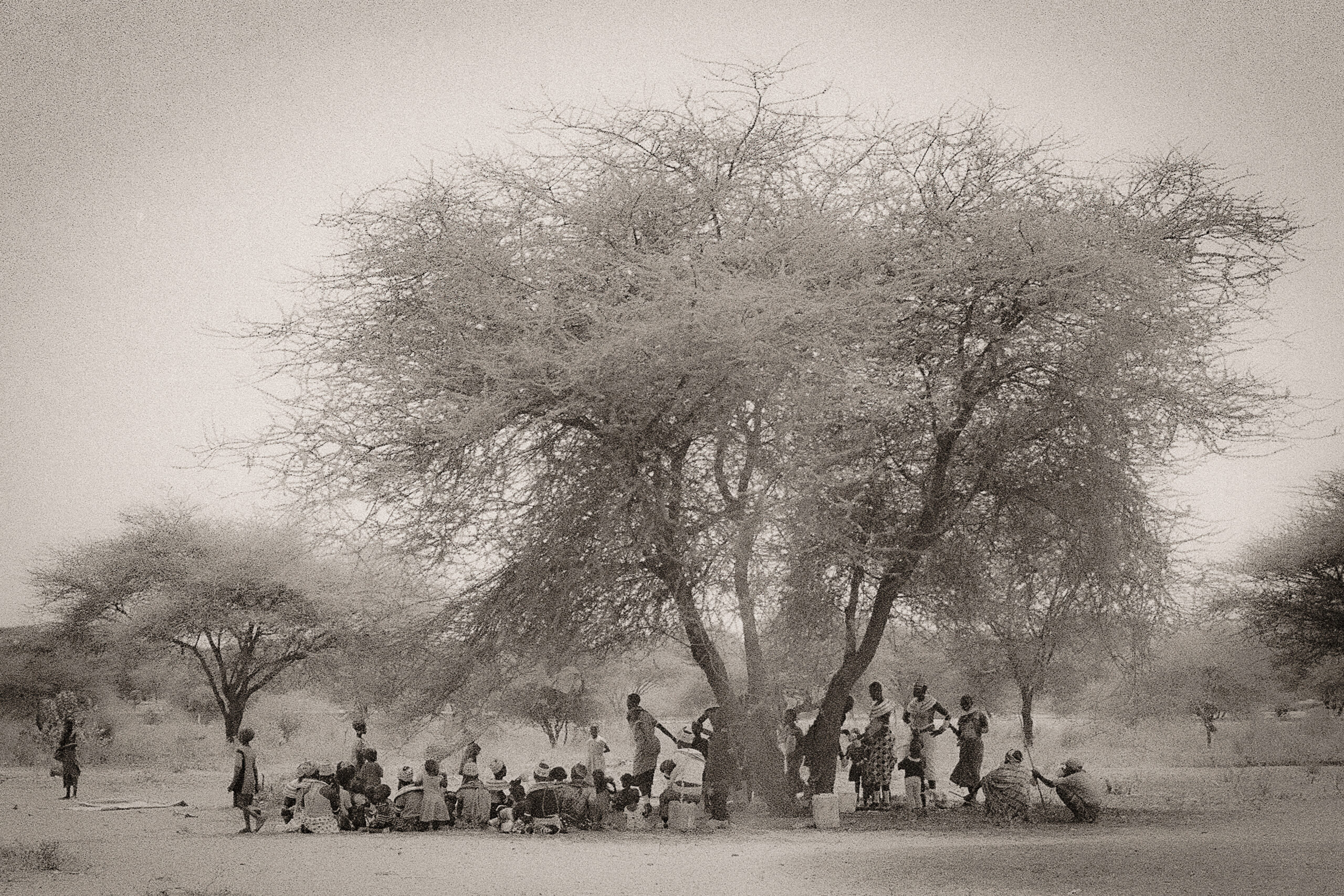
We are in southern Kenya now, at the Olderkesi Development Project, primarily for a Proximity Discipleship seminar. The gathering begins on Monday. Our original plan included ODP staff and fifty area church leaders. We have gone out into neighboring areas and issued the invitation. The latest estimates suggest that between seventy-five and one hundred people may attend when the conference begins.
The response has been overwhelming.
That is a ministry update, but it is also part of the theological question this chapter puts before us. Hezekiah did not wait for the northern tribes to appear at his door. He sent the invitation into their towns. Here, too, the invitation has moved beyond the group we first expected to gather. We are grateful for every person who may come, and we know that a larger estimate is not itself the measure of what God will do. The number tells us that the invitation has traveled farther than our original plan. What happens in the gathering belongs to the LORD.
Proximity Discipleship is not simply closeness as a technique. It is a life formed near to God and then sent toward others with patience, truth, and welcome. Hezekiah’s movement in this chapter follows that pattern: the king who restored worship now reaches beyond the center to call the scattered back to it. The work of going out is not an alternative to gathering around God. It is how the invitation to gather reaches people who might otherwise remain outside it.
That is why the seminar matters to us. We are not arriving to celebrate a crowd, deliver a formula, or claim a result before the work has begun. We are coming alongside ODP staff and area church leaders for a time of formation and shared attention to Christ. We are praying that those who gather will be strengthened to live near to Him and to carry His invitation into the communities where He has placed them.
The Passover Lamb and the Intercessor
Hezekiah’s intercession foreshadows the work of a greater Priest and King. The king can call the people to the feast and pray for those who arrive unprepared, but he cannot become the sacrifice that makes the feast possible. The New Testament names the One to whom the Passover has always been pointing:
“Cleanse out the old leaven that you may be a new lump, as you really are unleavened. For Christ, our Passover lamb, has been sacrificed.”
— 1 Corinthians 5:7 (ESV)Jesus does more than invite the unclean to a table. He gives Himself as the Passover Lamb. He does not overlook sin or wave away the holiness of God. He bears sin and opens the way for sinners to draw near. The welcome He offers is not a denial of the cost; it rests upon the cost He Himself has borne.
And He continues to intercede for those who come to God through Him:
“Consequently, He is able to save to the uttermost those who draw near to God through Him, since He always lives to make intercession for them.”
— Hebrews 7:25 (ESV)
Hezekiah prayed for the people who had come. Christ lives to make intercession for all who draw near through Him. The king’s prayer in Jerusalem is a real act of mercy, but it is not the end of the story. The greater Priest and King does not merely ask that the unprepared be pardoned. He secures their welcome by His own sacrifice and keeps interceding for them.
That is the feast to which the Church is sent to invite people: not a gathering built around our achievement, but a welcome made possible by Christ. We do not go out as owners of the invitation. We go as people who have received mercy and now bear witness to the One who gives it.
Hezekiah’s couriers went beyond Jerusalem. Some were mocked. Some humbled themselves and came. The king prayed for those who arrived in need, and the LORD heard and healed them.
We are carrying that story with us as we prepare to gather at Olderkesi. The invitation has gone into neighboring areas, and more people may come than we first expected. We will receive them not as a tally to celebrate, but as neighbors and leaders whom God has entrusted to this moment. We will ask the LORD to form us together, to make our nearness to Christ visible in the way we welcome, listen, teach, and serve.
A faithful invitation tells the truth about the feast and leaves the response to God. It goes out beyond the people we already know. It does not confuse welcome with indifference, or preparation with worthiness. It points to the gracious LORD, and finally to Jesus, the Passover Lamb and lasting Intercessor.
The invitation is out. The gathering begins Monday. Our prayer is that every person who comes will find more than a seminar: a fresh call to draw near to Christ, and a renewed courage to carry His invitation into the places where they live and serve.
Come to the feast.
From one man He made all the nations, that they should inhabit the whole earth; and He marked out their appointed times in history and the boundaries of their lands. God did this so that they would seek Him and perhaps reach out for Him and find Him, though He is not far from any one of us. Acts 17:26-27