
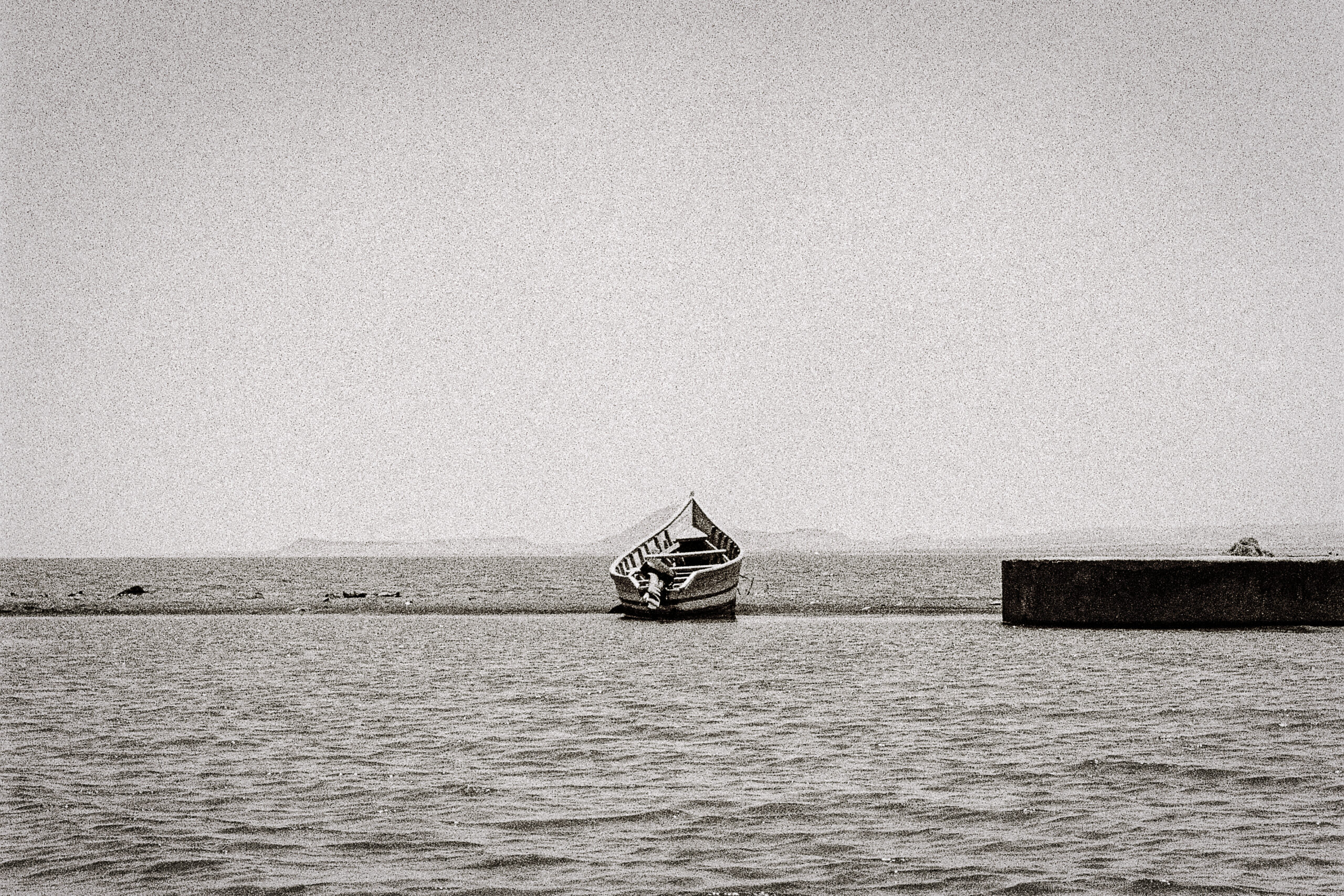
“Then Samuel took a stone and set it up between Mizpah and Shen and called its name Ebenezer; for he said, ‘Till now the LORD has helped us.’”
— 1 Samuel 7:12 (ESV)
Memory is a strange steward of the past.
It preserves some moments with astonishing clarity and allows others to fade almost beyond recovery. It softens what once wounded us. It sharpens what once seemed small. Given enough time, hardship can acquire a warm light, while seasons we once called good can be recast through regret. We do not merely retrieve the past. We interpret it—and our interpretations are not always trustworthy.
This is one reason comparison is so dangerous. We compare the present, which we know in all its unfinished complexity, with a past that memory has already edited. We place today—with its unanswered questions, visible limitations, and unresolved tensions—beside yesterday after yesterday has been trimmed, colored, and arranged into a story we can bear. Then we wonder why the present feels thin.
Scripture calls us to remember differently.
Biblical remembrance is not nostalgia. It is not the sentimental recovery of a former season, nor an attempt to live again in what God has already brought to completion. Biblical remembrance is an act of covenant fidelity. It looks backward in order to see God truthfully—and then turns forward prepared to trust Him again.
That is what Samuel’s stone was for.
Israel had gathered at Mizpah in repentance. The Philistines heard of the assembly and moved against them. Fear spread through the camp, and the people pleaded with Samuel not to cease crying out to the LORD on their behalf. Samuel offered the sacrifice. The LORD answered with thunder. The enemy was thrown into confusion, and Israel pursued what only moments before it had feared.
Then Samuel did something deliberately physical.
He took a stone, raised it between Mizpah and Shen, and named it Ebenezer—“stone of help.” The stone did not win the battle. It did not possess power. It was not an object of worship. It was a witness.
Every time Israel passed that place, the stone would speak without words: Here, the LORD helped us.
There is a similar pattern earlier in Israel’s history. When the people crossed the Jordan on dry ground, Joshua appointed twelve men to carry twelve stones from the riverbed and set them up at Gilgal. The purpose was explicitly generational:
“When your children ask in time to come, ‘What do those stones mean to you?’ then you shall tell them that the waters of the Jordan were cut off before the ark of the covenant of the LORD. When it passed over the Jordan, the waters of the Jordan were cut off. So these stones shall be to the people of Israel a memorial forever.”
— Joshua 4:6–7 (ESV)
The Jordan stones and Samuel’s Ebenezer belong to the same theology of remembrance. God’s people were commanded to place visible markers in the landscape because human memory is vulnerable. The marker kept the event from dissolving into abstraction. It gave a child something to point toward and an elder somewhere to begin.
What does this stone mean?
It means the river opened.
It means the enemy did not prevail.
It means we were afraid, and the LORD was faithful.
The stones did not invite Israel to worship the past. They trained Israel to recognize the God who had accompanied them through it.
We still need Ebenezers—not necessarily stones raised beside a road, but truthful markers of divine help. A date written in the margin of a Bible. A photograph from a place where a prayer was answered. A journal entry from the season when provision arrived at the last possible hour. A scar that reminds us we survived what once seemed unsurvivable. A church, a friendship, a table, a name.
These markers do not tell us that every season felt good. They tell us that God was faithful within it.
That distinction matters.
There is a way of remembering that produces gratitude. There is also a way of remembering that produces captivity.
The difference often appears in the question we ask of the past. Gratitude asks, Where was God faithful? Nostalgia asks, Why can today not be more like yesterday?
The first question strengthens trust. The second quietly places the present on trial.
The wisdom of Ecclesiastes warns us plainly:
“Say not, ‘Why were the former days better than these?’ For it is not from wisdom that you ask this.”
— Ecclesiastes 7:10 (ESV)
The problem is not that former days were never good. Some were. The problem is that comparison rarely allows us to see either season truthfully. We compare the harvest of one year with the planting of another. We compare an old answer with a new question. We compare a chapter God has already resolved with a sentence He is still writing.
Then comparison opens two familiar traps.
If the present appears better than the past, pride whispers that we have finally mastered what once mastered us. We begin to treat grace as achievement. We forget the people who carried us, the providences we did not arrange, and the mercy that met us before we knew enough to ask for it.
If the present appears worse than the past, envy turns our attention toward another person’s season—or toward an earlier version of our own life. We become resentful of what others seem to possess, or suspicious that God has withheld something He once gave freely. When we fall into comparison — measuring now against then, or ourselves against others — gratitude is the first casualty. It thins out, grows diluted. Since trust in God rests on remembered gratitude, it cannot hold when gratitude thins. The two move together, downward.
Pride and envy appear to move in opposite directions, but they share the same error: both place the self at the center of the story. Pride says, Look what I have become. Envy says, Look what I have been denied. Biblical remembrance says something else entirely:
Till now the LORD has helped us.
That sentence does not deny the difficulty of now. Samuel raised the stone after a battle, not after an afternoon without trouble. The memorial acknowledged danger, fear, repentance, dependence, and deliverance together. It refused to edit the hard parts out of the story, because the hard parts were the very places in which God’s help became visible.
The past is therefore not a residence to which we retreat. It is a witness we call when the present asks whether God can still be trusted.
I have returned recently from Vietnam with another marker in mind.
I had the privilege of witnessing the birth of the Global Methodist Church in Vietnam—the visible culmination of God’s faithfulness at work in that country for nearly a century. No single gathering can contain that history. No conference, signature, or photograph can explain every prayer offered, every seed planted, every believer who persevered, or every servant whose name may never appear in a report.
But there are moments when a long obedience becomes visible.
Standing there, I was not looking merely at the beginning of something new. I was looking at the fruit of what God had been doing long before any of us arrived. The occasion became an Ebenezer: not a monument to an organization, not a claim of human accomplishment, but a testimony.
Till now the LORD has helped us.
That memory does not permit us to live in the moment as though the work were complete. It calls us forward. The same faithfulness that sustained the church through hidden decades now demands present trust, present obedience, and present participation. The marker matters because the road continues beyond it.
This is what holy remembrance does. It receives the past as evidence, not as entitlement. It looks at what God has done and answers, Then we will trust Him here also.
Scripture does not only command God’s people to remember. It repeatedly tells us that God remembers.
The language can unsettle us if we read it as though God had misplaced something and suddenly recovered it. The omniscient God does not forget Noah, Rachel, or Israel and later call them back to mind. When Scripture says that God remembers, it announces that He is acting in fidelity to His covenant, His compassion, and His promises.
After the waters of judgment covered the earth, Genesis turns with one of the most consequential sentences in the flood narrative:
“But God remembered Noah and all the beasts and all the livestock that were with him in the ark. And God made a wind blow over the earth, and the waters subsided.”
— Genesis 8:1 (ESV)
Noah had not been abandoned inside the ark. The verse marks the movement of God’s preserving purpose toward deliverance. God remembers, and the waters begin to recede.
Later, Rachel lives beneath the grief of barrenness while her sister bears children. Then the text tells us:
“Then God remembered Rachel, and God listened to her and opened her womb.”
— Genesis 30:22 (ESV)
Again, remembrance becomes action. God sees what human comparison has made painful, hears what has been carried before Him, and intervenes according to His wisdom.
Then, in Egypt, the descendants of Abraham groan beneath slavery:
“And God heard their groaning, and God remembered His covenant with Abraham, with Isaac, and with Jacob. God saw the people of Israel—and God knew.”
— Exodus 2:24–25 (ESV)
He heard. He remembered. He saw. He knew.
These are not the movements of a distant God struggling to recover forgotten information. They are covenant words. The God of Scripture binds Himself to His promises and then acts consistently with what He has spoken. His remembrance is not fragile, selective, or distorted. He does not romanticize the past. He does not confuse our faithfulness with His own. He remembers perfectly, and His perfect remembrance becomes mercy in history.
We remember because God remembers first.
Our memory falters. His covenant does not.
Our interpretation shifts. His character does not.
Our confidence rises and falls with circumstance. His faithfulness remains.
This is the claim beneath every memorial stone in Scripture: His past faithfulness demands our present trust.
Not because God owes us the repetition of a previous outcome. He is not bound to reproduce an earlier season in the form we prefer. The Jordan may open once and remain closed another time. One battle may end in thunder; another may require endurance. Remembering does not give us control over what God will do next.
It gives us reason to trust who He will be.
The Ebenezer does not say, Tomorrow will look like yesterday. It says, The God who met us yesterday will not cease to be faithful tomorrow.
That is the difference between faith and nostalgia. Nostalgia wants the old road back. Faith trusts God on the road now before us.
Perhaps this is why Scripture gives us physical markers, repeated feasts, genealogies, songs, testimonies, and covenant language. God knows how quickly fear narrows our field of vision. The present crisis can become so large that it obscures every evidence of grace that preceded it. We need the stone. We need the story. We need someone to ask what the marker means so that we can say it aloud again.
Here, the LORD helped us.
Here, He carried us when strength failed.
Here, He provided through hands we did not expect.
Here, He preserved a church across generations.
Here, He heard, remembered, saw, and knew.
Then remembrance becomes more than reflection. It becomes obedience. We rise from the past and face the present with a steadied heart—not because the present is simple, but because God has already established His character in the story behind us.
The call is not to pretend every memory is good. Some memories still ache. Some stones mark graves rather than victories. Some seasons leave questions that will not be answered in this life. Biblical remembrance does not require us to rename evil as good or grief as blessing. It requires us to tell the truth about both the wound and the God who did not abandon us within it.
Raise the marker.
Tell the story accurately.
Refuse the distortions of pride, envy, nostalgia, and despair.
Then look at the unfinished road ahead and say what Israel learned to say whenever faith found its voice:
Till now the LORD has helped us.
And because He has helped us till now, we will trust Him here.
From one man He made all the nations, that they should inhabit the whole earth; and He marked out their appointed times in history and the boundaries of their lands. God did this so that they would seek Him and perhaps reach out for Him and find Him, though He is not far from any one of us. Acts 17:26-27