

Last week, we lit the first candle of Advent and remembered the loss of Eden—the moment when sin fractured communion between God and humanity. But God did not leave us in exile. He planted a promise in Genesis 3:15, the first whisper of hope that presence would be restored. This week, we light the second candle—Peace—and we watch God take the next step in His relentless pursuit. He builds a dwelling place among His people.
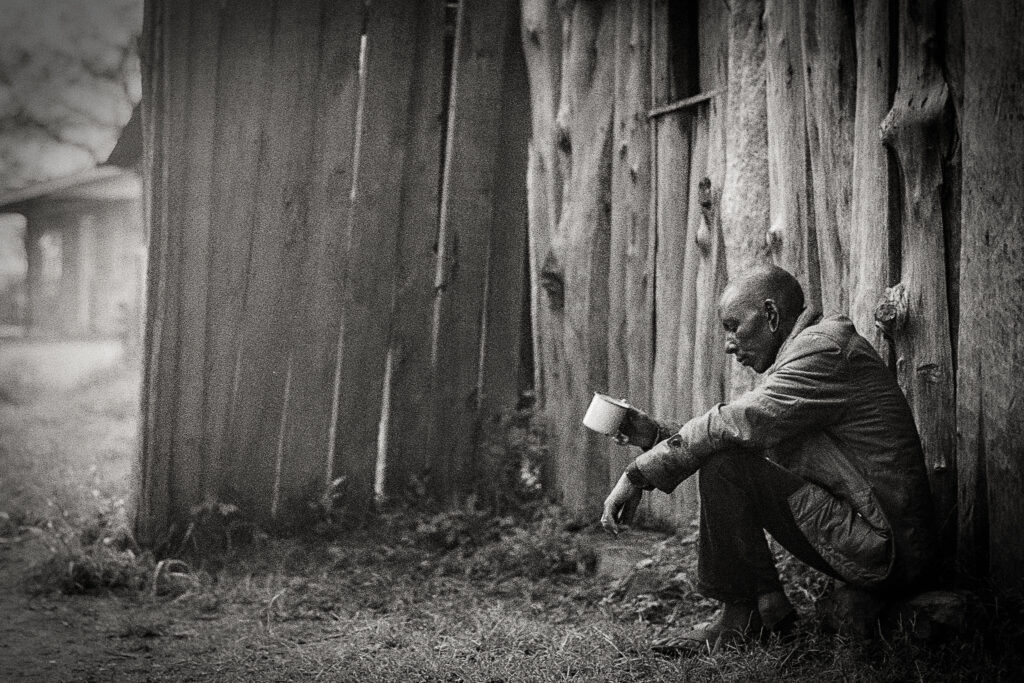
Peace is not the absence of labor or struggle. It is the presence of God in the midst of it. Every morning at Olderkesi Development Project in southern Kenya, we pause at 10 AM for tea time. Work stops. We gather. We sit together, hold warm cups, and share a few moments of fellowship. It is a simple rhythm, unremarkable to outsiders, but it is shalom—wholeness woven into the fabric of daily life. This is what God pursued when He built the tabernacle. Not a monument to human achievement, but a meeting place. A daily rhythm of presence. A gift freely given.
The Golden Calf — When We Try to Force God’s Hand
“And Aaron said to them, ‘Take off the rings of gold that are in the ears of your wives, your sons, and your daughters, and bring them to me.’ So all the people took off the rings of gold that were in their ears and brought them to Aaron. And he received the gold from their hand and fashioned it with a graving tool and made a golden calf. And they said, ‘These are your gods, O Israel, who brought you up out of the land of Egypt!'” — Exodus 32:2–4 (ESV)
The tragedy of the golden calf is not merely that Israel built an idol. The tragedy is that they built it because they craved presence.
Moses had been on the mountain for forty days, and the people grew restless. They wanted a god they could see, a god they could control, a god who would sit where they placed him. So they melted down their gold and fashioned a calf—an empty seat meant to force the divine to dwell among them. It was a tarnished facsimile of the presence they were made for, a counterfeit born of impatience and unbelief.
This desire is woven into our very being. We were created in the image of God (Genesis 1:26), fashioned for communion with the Almighty. The ache for His presence is not a flaw; it is the mark of our design. But in our misguided searching, we craft idols. We chase false promises. We believe the lie that we can manufacture presence, that we can coerce God to dwell with us on our terms.
The golden calf was meant to be a throne—a seat to force the divine to sit among the people. But God cannot be controlled. Presence cannot be manufactured. And the calf, for all its gleaming gold, remained empty.
The Tabernacle — God’s Uncoerced Gift
“Then the cloud covered the tent of meeting, and the glory of the LORD filled the tabernacle. And Moses was not able to enter the tent of meeting because the cloud settled on it, and the glory of the LORD filled the tabernacle.” — Exodus 40:34–35 (ESV)
After the golden calf, after rebellion and broken covenant, God does the unthinkable. He does not abandon His people. He does not leave them to their idols. Instead, He gives them what they were searching for—but on His terms, as a gift, not as something coerced.
He instructs Moses to build the tabernacle. Not a throne to trap divinity, but a footstool for the King of Kings. Not a gilded cage, but a mercy seat where God’s presence would dwell freely, unforced, and uncoerced. The Ark of the Covenant becomes the meeting place—the locus where heaven touches earth, where the Creator communes with the created.
And when the tabernacle is complete, the glory of the Lord fills it. The cloud settles. The presence that Israel tried to manufacture through gold and graving tools is given as a gift. God does not come because they forced Him. He comes because He refuses to leave them in exile.
Shalom — The Peace of God’s Presence
The Hebrew word for peace is shalom (שָׁלוֹם). It means more than the absence of conflict. It means wholeness, completeness, restoration. It is the right ordering of all things under God’s reign. Shalom is what humanity lost in Eden, and shalom is what God begins to restore in the tabernacle.
The tabernacle becomes the dwelling place of shalom. It is the space where God’s presence restores what was fractured by sin. It is the place where sacrifices are offered, where sins are atoned, where the people come near to the Holy One and are not consumed. The tabernacle is not a monument to human faithfulness—it is a monument to divine pursuit.
Psalm 46 captures this reality:
“God is our refuge and strength, a very present help in trouble. Therefore we will not fear though the earth gives way, though the mountains be moved into the heart of the sea, though its waters roar and foam, though the mountains tremble at its swelling. There is a river whose streams make glad the city of God, the holy habitation of the Most High. God is in the midst of her; she shall not be moved; God will help her when morning dawns.” — Psalm 46:1–5 (ESV)
God is in the midst of His people. That is the source of shalom. Not the absence of trouble, but the presence of God in the midst of it.
The Temple — God Amplifies His Commitment
“And when the priests came out of the Holy Place, a cloud filled the house of the LORD, so that the priests could not stand to minister because of the cloud, for the glory of the LORD filled the house of the LORD.” — 1 Kings 8:10–11 (ESV)
Centuries later, Solomon builds the temple. It is larger, grander, more permanent than the tabernacle. And when the priests place the Ark in the Most Holy Place, the glory of God fills the house so thickly that the priests cannot stand to minister.
This is not a new promise. It is the same presence that filled the tabernacle, now amplified. God doubles down on His commitment to dwell with His people. He does not grow weary of rebellion. He does not retreat when they fail. He remains.
This pursuit is unique to Yahweh. No other religion has a god who builds a dwelling place among his people. The gods of the nations remain in their temples, distant and unapproachable. They demand worship but offer no presence. They require sacrifice but give no communion. Ishtar does not pitch her tent among mortals. Rama and Buddha remain silent and distant. Allah does not build a tabernacle in the center of the camp.
But Yahweh does. He moves into the neighborhood. He dwells among rebels. He pursues His people with relentless, uncoerced love.
Peace in Advent — The God Who Refuses to Leave
Advent invites us to remember that peace is not a feeling—it is a Person. It is God’s presence among us. The tabernacle and temple pointed forward to the ultimate fulfillment of this promise. John writes:
“And the Word became flesh and dwelt among us, and we have seen his glory, glory as of the only Son from the Father, full of grace and truth.” — John 1:14 (ESV)
The Greek word translated “dwelt” is eskēnōsen (ἐσκήνωσεν)—literally, “He tabernacled among us.” Jesus is the fulfillment of every dwelling place God built. He is the temple made flesh, the mercy seat incarnate, the presence of God uncoerced and freely given.
The second candle of Advent reminds us that God pursued us relentlessly. He did not wait for us to get it right. He did not demand that we stop building golden calves before He would draw near. He came anyway. He built dwelling places among rebels. He refused to stay distant.
And in the fullness of time, He took on flesh and moved into our world permanently. The Word tabernacled among us. Immanuel—God with us—pitched His tent in the center of the camp and refused to leave.
We light the second candle and we remember: peace is not something we manufacture. It is not something we coerce. It is a gift, freely given by the God who pursues.
From one man He made all the nations, that they should inhabit the whole earth; and He marked out their appointed times in history and the boundaries of their lands. God did this so that they would seek Him and perhaps reach out for Him and find Him, though He is not far from any one of us. Acts 17:26-27