
There is a word in Hebrew — ger — that does not translate cleanly.
The standard English options include: sojourner, stranger, foreigner, alien, wanderer. None of them fully carries what the word holds. A ger is not simply a person who is traveling. A ger is a person who is traveling through a place that was never theirs — who is present in a land, familiar with its roads, shaped by its rhythms, and yet whose deepest belonging lies somewhere else entirely. The ger is the one who knows the territory without owning it. Who has learned to navigate without ever arriving.
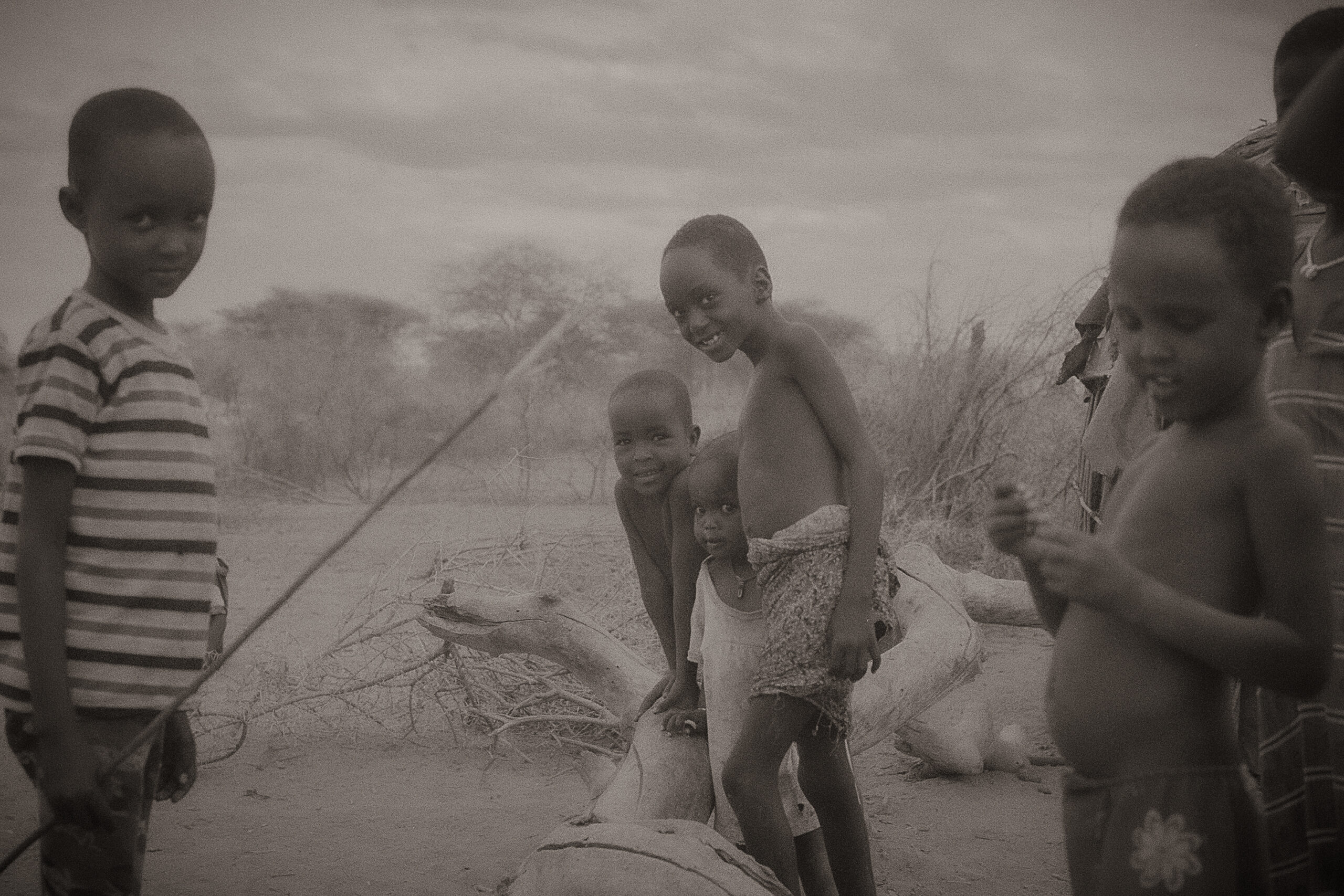
I have been thinking about this word since I landed back from Kenya in June.
The journey to northern Kenya is not a single movement. It is a sequence of cumulative demands that leave the body and the spirit operating on reserves neither can quite account for.
Nearly twenty-three hours of flight time to begin. A day in Nairobi — which this past May was not rest but mechanics: the Camel’s suspension upgrades, the kind of practical preparation that the bush road demands and that no amount of planning fully anticipates until you are there, standing in a garage, waiting. Then the road itself: the A2 unwinding ever northward, ten hours of driving, the landscape flattening and reddening as Nairobi falls away and the bush opens up ahead, until at sunset I arrived in Nairibi. Enough time to make camp, share a meal with friends, and sleep.
The next morning, I broke camp again.
Four more hours north. L’Moti by mid-morning. And by the following day — church, and then the opening of the first seminar, pastors and community leaders gathering from the surrounding bush for six days of Proximity Discipleship training.
I say all of this not to inventory the difficulty of the journey but to name something I have only recently begun to notice about it. These roads have become familiar. The A2, the red dust, the acacia silhouettes against a copper sky, the specific way the light falls in the late afternoon over the Marsabit plateau — I know these things now in the way you know a road you have driven many times. The rhythm of the journey has settled into the body. I move into ministry almost before I have stopped moving, because the road has become familiar enough to stop demanding my full attention.
And yet.
At some point during those six days in May — somewhere between the seminars and the camp and the road and the prayers and the long conversations under the stars — I became aware of something I had not quite named before. It is possible to get so deep into familiar motion that you lose your bearings entirely. Not geographically. Something more subtle. You look up and realize you do not quite know, in this moment, where you are — not on the map, but in the larger sense. What day it is. What continent you are on. What home you are moving toward.
The familiar road had become, in a different sense, disorienting.
Homeward bound from May’s trip, I did something I rarely do.
I left the transit lounge at Amsterdam Schiphol early — far earlier than necessary — and walked. Slowly. The way you walk when there is no hurry and you have decided, deliberately, to use the time rather than kill it.
You need only walk at a measured pace through a major international departure terminal to receive an accidental sermon on the human condition.
The motifs present themselves without being asked.
The businessman, jacket open, laptop bag swinging, eyes on his phone, navigating by instinct toward a gate he has cleared a hundred times — present everywhere and nowhere, moving through the terminal the way water moves through a channel, without resistance and without rest.
The group of Scottish school students — matching shirts, the whole cohort of them — on their way to Africa, most likely for the first time. Wide-eyed in a way that is not frightened but not yet settled either. The world suddenly larger than the map suggested. Everything unfamiliar at once.
The elderly couple standing in the middle of the concourse, passports held with both hands, studying the overhead signage with the concentrated attention of people who are not certain they are reading it correctly, and who are not too proud to stand still until they are sure.
These are not three unrelated vignettes. They are three versions of the same condition.
Every person in that terminal — the veteran traveler and the first-timer, the confident and the confused, the one who has done this a hundred times and the one for whom everything is new — shares exactly one thing: they are in transit. They are, in the precise sense of the Hebrew word, gerim. Sojourners. Passing through a space that is not theirs, oriented toward a destination they have not yet reached.
And on the face of each one, if you look carefully enough, you can see it: the particular expression of a person who is between places. Not quite lost. Not quite home.
Abraham knew this expression well.
Not as a newcomer. By the time we reach Genesis 23, Abraham has been in Canaan for decades. He has walked these roads in detail — from Shechem to Bethel to the Negeb, through Egypt and back, across the plains of Mamre, up the road to Moriah. He has dug wells in this land, negotiated with its kings, fought its wars, and received covenant promises beneath its open skies. He knows the territory in the way that only years of faithful, attentive sojourning can produce.
And when Sarah dies — when the grief of the man who has walked so many roads alone with her suddenly sharpens into the practical weight of burial — Abraham stands before the sons of Heth and says it plainly:
“I am a sojourner and foreigner among you; give me property among you for a burying place, that I may bury my dead out of my sight.”
— Genesis 23:4 (ESV)
Ger. Abraham’s own word for himself. Not a word of despair. Not a complaint. A settled, clear-eyed, honest statement of identity. I know these roads. I have walked them for decades. I have been shaped by this land and shaped it in return. And I am a ger here. I am still passing through.
This is the move the letter to the Hebrews makes explicit centuries later:
“By faith Abraham obeyed when he was called to go out to a place that he was to receive as an inheritance. And he went out, not knowing where he was going. By faith he went to live in the land of promise, as in a foreign land, living in tents with Isaac and Jacob, heirs with him of the same promise. For he was looking forward to the city that has foundations, whose designer and builder is God.”
— Hebrews 11:8–10 (ESV)
Abraham’s lifelong tent-dwelling was not a failure to put down roots. It was a theological declaration. Every tent peg driven into Canaanite soil was a reminder — to Abraham himself, to his household, and to us — that the present arrangement was not permanent. The patriarch who could have built a city chose to keep the tent, because he was oriented toward a city whose foundations he had not yet seen.
The familiarity of the road was never confused with the permanence of arrival.
God does not merely permit His people to be sojourners. He inscribes the memory of sojourning into the moral architecture of the law.
“You shall not wrong a sojourner or oppress him, for you were sojourners in the land of Egypt.”
— Exodus 22:21 (ESV)
The command is grounded entirely in shared experience. Israel is not told to care for the stranger because kindness is strategically advantageous, or because it will cultivate reciprocal goodwill, or even because the ger is deserving. Israel is told to care for the stranger because you know what it is. You have been there. You were sojourners in Egypt — vulnerable, displaced, in someone else’s land, dependent on the mercy of people who did not always extend it. That memory is not incidental to the command. It is the command.
Leviticus sharpens the register further:
“When a stranger sojourns with you in your land, you shall not do him wrong. You shall treat the stranger who sojourns with you as the native among you, and you shall love him as yourself, for you were strangers in the land of Egypt: I am the Lord your God.”
— Leviticus 19:33–34 (ESV)
Love him as yourself. Because you are him. Because the condition he is in is the condition you have been in, and the condition — in a deeper sense than Egypt alone — you have never fully left.
I walked slowly through Schiphol, and I watched the harried businessman and the wide-eyed students and the elderly couple with the passports. And I did not only observe. Something in the watching was also remembering. Recognizing. The look on their faces — that expression of a person between places — was not foreign to me. It was familiar in the deepest possible sense.
I am still a ger too.
There is a specific spiritual risk that belongs to the experienced pilgrim, and it is this: the familiar road can become, through familiarity alone, a subtle counterfeit of home.
When everything is new and nothing is certain, the pilgrim is acutely aware of his condition. He knows he does not belong here. The strangeness of the territory keeps him oriented toward the destination. But as the miles accumulate and the roads begin to feel known, as the rhythms of sojourning are absorbed into the body and the work of navigation becomes less demanding — it becomes possible to forget, in the day-to-day mechanics of moving forward, that you are still moving toward something.
You can get lost in a familiar place. Not geographically. The subtler kind.
This is what I mean when I say that sojourning can be disorienting. Not the first days of unfamiliarity, when the strangeness itself is clarifying. But the later season — the season when the roads are known and the rhythms are established and the work is absorbing — when the accumulated momentum of faithful motion can quietly, imperceptibly, crowd out the question of destination.
The Hebrews writer names the corrective:
“These all died in faith, not having received the things promised, but having seen them and greeted them from afar, and having acknowledged that they were strangers and exiles on the earth. For people who speak thus make it clear that they are seeking a homeland. If they had been thinking of that land from which they had gone out, they would have had opportunity to return. But as it is, they desire a better country, that is, a heavenly one. Therefore God is not ashamed to be called their God, for He has prepared for them a city.”
— Hebrews 11:13–16 (ESV)
Abraham could have returned. The road back was always there. What kept him moving was not the absence of an alternative — it was the presence of a destination. He was not running from something. He was moving toward something he had seen from afar and greeted. The orientation was not negative but positive — toward the city. The homesickness was real, and it was not for Egypt or Ur. It was for a country he had not yet reached.
The pilgrim who remembers this — who keeps the city on the horizon of his imagination even when the immediate road is familiar and the immediate work is absorbing — is the one who will not lose his way.
The road opens again on August 12.
In May, I came to train — six days of Proximity Discipleship seminars, bush pastors gathered from Lependera, L’Moti, and the surrounding villages. In August, I return to something larger: the Marsabit Ministry Soccer Tournament, a deliberate ministry platform that draws secondary students from villages across Northern Kenya to Nairibi — approximately 350 participants, all of secondary school age, gathered not merely to compete but to encounter the Gospel through relationship, teaching, and presence.
This is the incarnational posture in its most visible form. I do not summon people to a church building and ask them to enter my world. I step into theirs — onto the pitch, into the dust, into the rhythms of their community — because Jesus walked dusty roads and sat at wells and taught from fishing boats.
The tournament budget is $12,000 USD. That figure covers travel expenses, teaching team accommodation, ministry programming, community meals and operational costs for the event. Every dollar deploys directly into one of the most underserved youth populations in the African bush.
If you have been tracking my work in Marsabit — if any part of this reflection has resonated — this is a concrete place to invest. The tent stakes are coming up. The road opens August 12. And I do not go alone.
Give toward the Marsabit Ministry Soccer Tournament
This is what it means to live as a ger in Christ.
Not to be confused about my location. Not to be paralyzed by the disorientation. But to hold both things simultaneously — the familiar road and the unfinished journey, the known territory and the city still ahead — without collapsing either one into the other.
I am a sojourner. Not as a lament but as a vocation. The temporal world is not my home, not because it is without beauty or meaning or weight, but because it was never designed to be the final destination. I am in transit through something real and significant, on the way to something more real and more significant still.
The disorientation of sojourning — the moment you look up from the familiar road and realize you are not quite sure where you are, in the deeper sense — is not a sign that something has gone wrong. It may be the most honest moment available to the pilgrim. The moment of ger-consciousness: the awareness that this is not yet home, that I am still moving, that the tent stakes will come up again.
When that moment comes, I do not need a map. I need what Abraham had beneath the Canaanite sky and the letter to the Hebrews says he never lost: the vision of a city whose foundations have already been laid, whose designer and builder is God.
I am a ger. I am between places. And He has prepared for me a city.
Keep moving.
From one man He made all the nations, that they should inhabit the whole earth; and He marked out their appointed times in history and the boundaries of their lands. God did this so that they would seek Him and perhaps reach out for Him and find Him, though He is not far from any one of us. Acts 17:26-27