
“And what you have heard from me in the presence of many witnesses entrust to faithful men, who will be able to teach others also.”
— 2 Timothy 2:2 (ESV)
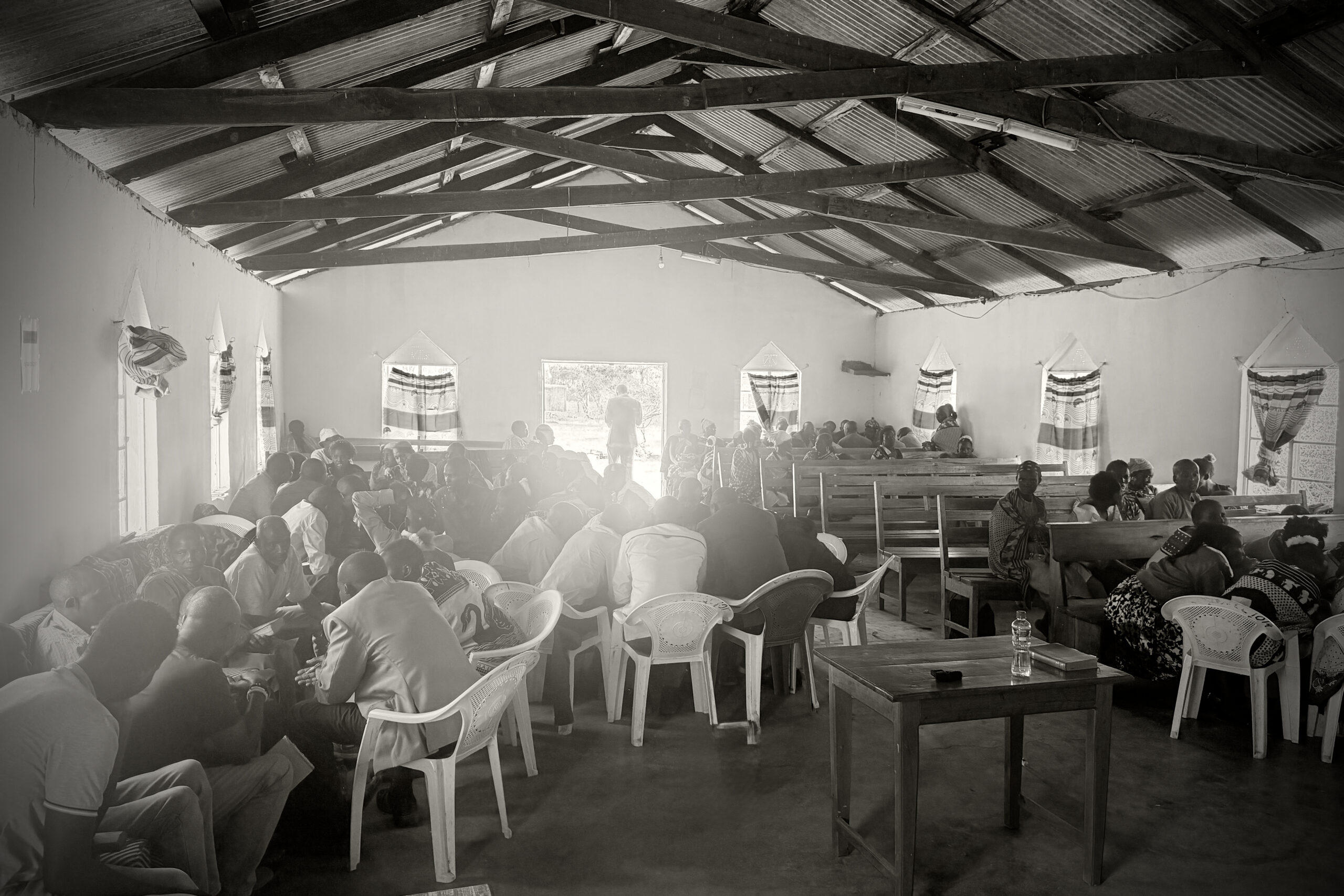
This past Wednesday, we stood in a field at Olderkesi and commissioned one hundred new disciple-makers.
Men and women who had, over the preceding days, counted the cost of obedience and found it worth paying. Men and women who had each named their own Timothy — a single disciple they would now return home to invest in, the way Paul invested in Timothy, the way we had just spent a week investing in them. By the time the final session closed, what had begun as a modest training for a handful of project staff had become something none of us had the faith to ask for at the outset: one hundred men and women, commissioned and sent.
To understand what that commissioning means, we have to go back exactly one year, to a conversation in the Central Highlands of Vietnam that none of us knew, at the time, was the beginning of anything at all.
Exactly one year ago, we took a risk on something big.
Iris and I were in Central Vietnam, working alongside our ministry partners there on intensive language training, team building, and strategic planning for the year ahead. One conversation, in particular, kept returning to the table: how do we engage the pastors of the independent churches we serve — not merely to encourage them, but to bring them a deeper level of training, and to begin identifying candidates who might one day be mobilized as cross-cultural missionaries under Beehive Global Collective?
The answer, as it took shape in that room, was discipleship training. Not a conference. Not a curriculum handed off and left behind. Something that would form leaders from the inside, the way we had watched leaders be formed in our own lives.
I had already begun work on a discipleship curriculum by October of last year, though I did not yet know what shape it would take. In August, while serving in Marsabit, Northern Kenya, alongside Rev. David in the Youth Soccer Ministry tournament, I had been re-reading Dietrich Bonhoeffer’s The Cost of Discipleship. I was struck anew — particularly in the first half of the book — by Bonhoeffer’s lament over what he called cheap grace: the modern West’s quiet seduction into a gospel that costs the sinner nothing, because it has first been emptied of everything it cost God.
The answer forming in my mind was not a new program. It was an old truth, recovered. Grace is not cheap. It cost the Creator of the universe His own Son. And if grace is costly, then our response to it cannot be casual. We are called to draw nearer to Him precisely because of what nearness cost Him first — so that His Spirit might shine through us, and others might be drawn, in turn, into the same costly discipleship.
This was the beginning of Proximity Discipleship as we know it now.
The conviction at the center of Proximity Discipleship is simple to state and demanding to live: all true discipleship flows from nearness to God. We are called to proximity with Him — to be near enough, long enough, and holy enough to be shaped by Him. The going and the making of disciples cannot begin until we have first drawn near ourselves.
“I am the vine; you are the branches. Whoever abides in Me and I in him, he it is that bears much fruit, for apart from Me you can do nothing.”
— John 15:5 (ESV)
Abiding comes before bearing fruit. Nearness comes before multiplication. This is the order Christ Himself established, and it is the order Proximity Discipleship has tried, from its first formulation, to honor rather than reverse.
“Let us then with confidence draw near to the throne of grace, that we may receive mercy and find grace to help in time of need.”
— Hebrews 4:16 (ESV)
Draw near. Then go. Never the reverse.
By the end of our trip to Vietnam last year, I had begun working in earnest on a ten-session curriculum — one that would walk pastors and church leaders first through the process of drawing near to Christ, then through counting the cost of obedience:
“And calling the crowd to Him with His disciples, He said to them, ‘If anyone would come after Me, let him deny himself and take up his cross and follow Me.’”
— Mark 8:34 (ESV)
From there, the curriculum moves through embracing our new identity in Christ, establishing community within a group of disciples, identifying and investing in a single disciple, and finally, being willing to send that disciple out to go and make disciples themselves.
I continued developing the curriculum through our furlough, from November 2025 through February 2026, working to have it ready for the seminar we were planning in the Central Highlands of Vietnam — the risk we would take at the opening of the 2026 travel season.
If you have followed our work over the past year, you have already read about that seminar, and how God moved powerfully during our time together there.
Proximity Discipleship is framed around Christ’s own model with His apostles — a model that dissolves the gap between teacher and student, lecturer and participant. For five days in February, we lived together, ate together, worshipped together, and learned together. That shared life would become a defining characteristic of Proximity Discipleship moving forward — not an accommodation made for the sake of logistics, but the method itself.
Throughout the Vietnam training, I had been sharing the recorded teaching audio with Rev. David. By the time I returned to Southern Kenya in April 2026, we were already in earnest planning for a modified Proximity Discipleship seminar in Marsabit, Kenya, later that spring.
In May, we led the pastors and leaders of both Nairibi and L’Moti through this training, following the same model of nearness — eating together, sleeping in bush camps together, worshipping together, learning together. It was, again, a powerful time of fellowship.
The impact of those first Marsabit seminars was almost immediate. When we returned in August for the Annual Youth Soccer Ministry tournament, I was introduced to several new elders in the church — men who had been named in the closing commissioning of the Nairibi seminar, who had themselves been discipled by participants of that seminar, and who had come to faith and were growing in their nearness to Christ as a direct result of the training.
Multiplication is happening.
Simiren Mako, the current manager of the Olderkesi Development Project, has joined our ministry team and travels with us when we deploy into Northern Kenya. Having seen the value of the seminar training firsthand, he asked that we lead his staff through it by the end of this year.
That is how we arrived at this moment — exactly one year since God first laid discipleship training on our hearts. Before we ever knew what impact it might have, we said yes to His calling.
This past Wednesday, we completed the final session of training here at Olderkesi. What we expected would be a modest training for a small number of staff members — men and women we know intimately — grew first to include area pastors and church leaders, fifty people in total. By the first day of the seminar, that number had grown further still, as students from the Olderkesi Ministry Training Institute joined as well. By the closing commissioning service, we had the privilege of commissioning one hundred new disciple-makers — men and women who have embraced the cost of obedience, who have named their own Timothy, and who are even now moving back into their communities, seeking first to draw nearer to Christ Jesus, and then to draw others to Him as well.
“Go therefore and make disciples of all nations, baptizing them in the name of the Father and of the Son and of the Holy Spirit, teaching them to observe all that I have commanded you. And behold, I am with you always, to the end of the age.”
— Matthew 28:19–20 (ESV)
This is the power of living in proximity to Christ. This is the power of saying yes — of counting the cost of obedience, and finding it worth paying.
It has been a transformative year for us at Beehive Global Collective, and God is revealing our calling for the next season with increasing clarity.
We are currently planning training seminars in Vietnam in a new province just north of the Central Highlands, where we hope to engage a new cohort of pastors and leaders. At the same time, our eyes remain on Marsabit, where we are discussing how to include the pastors and leaders of the emerging church communities under Peter LeKombe’s leadership, in villages such as M’Pargas, M’Pang, Serai, and N’Gurronit. And here in Southern Kenya, we have begun engaging local area leadership in conversations about expanding this training in the coming year — not only in Olderkesi, but in Naikarra and the surrounding church communities of Narok West.
As we look back on this year — at what God faithfully did — we are filled with gratitude. We are grateful that He has been with us, has blessed us, and has protected us through some difficult situations. We are equally grateful for you. Without your prayers and your support, none of this would have been possible. Thank you.
Soli Deo Gloria.
Mat Luce
Olderkesi, Kenya
From one man He made all the nations, that they should inhabit the whole earth; and He marked out their appointed times in history and the boundaries of their lands. God did this so that they would seek Him and perhaps reach out for Him and find Him, though He is not far from any one of us. Acts 17:26-27