

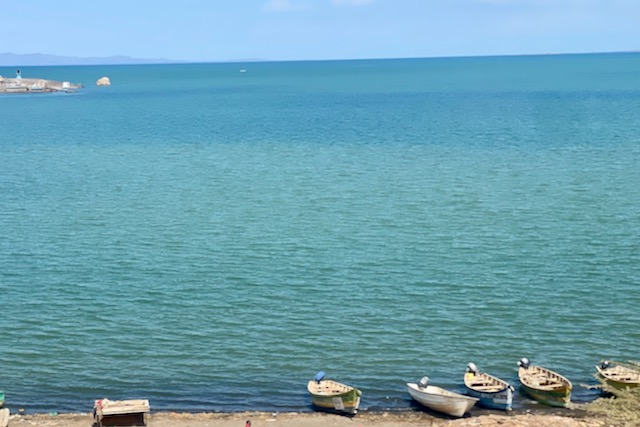
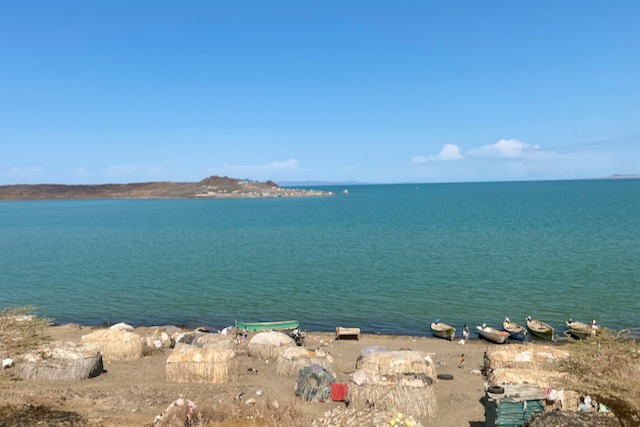
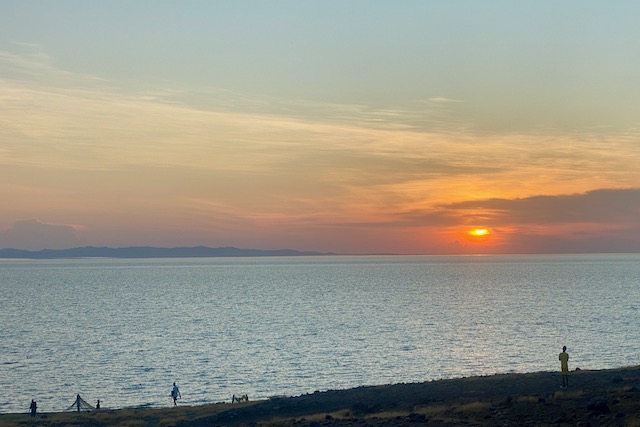
El Molo Bay is called the ‘Jade Sea’ locally, and around its shores lie three formerly unreached villages of the El Molo, photos cannot fully capture, nor can words fully express the stark beauty of the landscape. As our time ended with these beautiful people, we drove south along the coast with our hearts full of joy at the work accomplished, and our heads full of new ideas for the months and years ahead. The deep sapphire waters that had seemed so daunting just days before now reflected the morning sun like scattered diamonds, a fitting metaphor for the transformation we had witnessed. What had begun as an expedition into uncharted ministry territory was concluding as a testimony to God’s faithfulness in the most remote corners of His creation.
It is a remarkable thing, when you spend months, years really, of careful planning to prepare for a single moment, and then before you know it, you look around and realize you are already midstream, that the work you set out to do IS being done, and that you are playing your own small part in something much larger than you could ever imagine. The expedition we had dreamed about, prayed over, and prepared for so meticulously was suddenly in our rearview mirror, but the impact was just beginning to unfold. We were no longer preparing to reach the unreached—we had become the instruments through which the unreached had been reached.
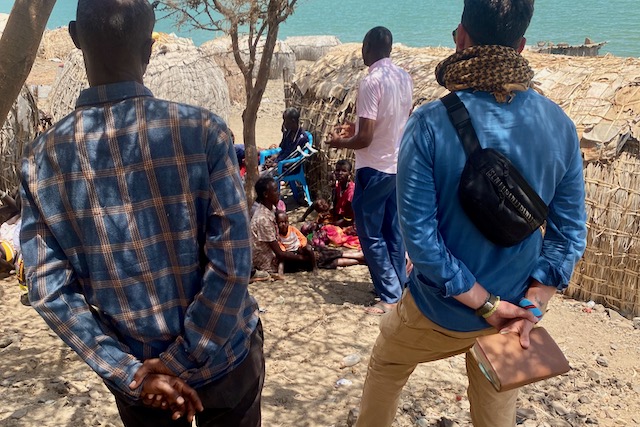
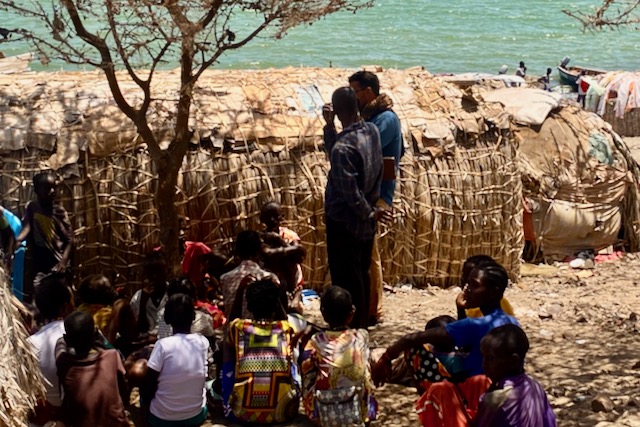
Our final day of ministry with the El Molo began much like the others—with unexpected delays that initially tested our patience but ultimately revealed God’s perfect orchestration. The El Molo rely primarily on fishing for their livelihoods, but we had learned that tourists periodically come to the village of Algas for a ‘cultural experience,’ paying to see the El Molo in their ‘traditional’ way of life. These visitors will even pay for boat rides to the El Molo shrine to photograph the pagan relics housed there. It is a sad reality to witness the Western world intruding in such a way—having no cultural context or connection, but merely ‘ticking boxes’ to add something new to a social media stream. It is an equally sad reality to see a proud cultural people like the El Molo embrace such self-imposed exploitation. As we prepared to visit the remaining villages of Algas and Layeni, what should have been straightforward transitions became extended waiting periods. Just as we were to begin our time of teaching in Algas, three tourist vehicles arrived. Suddenly, the boats that were going to Komote to ferry villagers across to the teaching were turning due south, going not to the village, but to the waiting tourists on the shore. Our carefully planned timeline seemed to unravel once again. But by now, our team had learned to recognize these apparent setbacks as divine appointments. Once again, what appeared to be frustrating obstacles became sacred opportunities for God to work in ways we never could have planned.
It was during these delays that some of our most significant ministry moments unfolded. While waiting for the boats to return from their tourist excursion, I found myself with over an hour alone with Peter LeKombe, able to walk him through the profound missionary calling he had received to return and disciple the El Molo people. This desert-dweller who had trembled on his first boat ride just days earlier was now processing God’s call to become a lake missionary—a conversation that required unhurried time and careful discipleship that only these delays could provide. The tourist boats that had seemed like such an interruption had actually created the perfect opportunity for this crucial mentoring moment. Later, while we continued to wait, I was granted precious time alone with the chief, where I was able to pray over him for healing of the chronic pain in his legs that had plagued him for years. But perhaps most remarkably, David and I were asked to pray for a small child who was gravely ill, unable to eat or even open his eyes. As we laid hands on him and prayed for healing in Jesus’ name, we watched in amazement as he opened his eyes for the first time in days and began to drink milk. What had seemed like wasted time became the very hours when God chose to demonstrate His power most dramatically—while tourists photographed dead idols, we witnessed the living God bring healing and call forth missionaries.
Through our days of ministry with the El Molo, we began to understand the profound spiritual darkness underlying their traditional practices. The El Molo have historically been called the “Tribe of 99,” and we discovered this wasn’t merely about population control—it reflected a deeply rooted belief in a “divine balance” between life and death. When a child was born, elders would designate which member of the community had lived a full, rich life and was ready to “right the balance” through death within 24 hours. This created a tragic dichotomy where every birth celebration was shadowed by impending loss, and every birthday became a bittersweet reminder of those who had departed to maintain the cosmic equilibrium. Conversely, when death occurred, there was urgent pressure for new life to restore the balance. At the center of these pagan beliefs stood the fertility shrine we had observed, where a demon idol resided and offerings were made to entreat a fertility god for conception through ritualistic practices and sacrifices. The tourists who paid to photograph these relics had no understanding they were documenting instruments of spiritual bondage that had held an entire people group captive for generations. As we prepared to leave the El Molo, we knew that true discipleship would require not just introducing them to Jesus, but helping them understand how the Gospel of life could break these ancient chains of death and fear.
As we reflected on our time with the El Molo and prepared for departure, it became clear that this expedition had been far more than a successful Gospel outreach—it had fundamentally shaped our understanding of cross-cultural missions and long-term discipleship strategy. In our evening discussions, we recognized that the El Molo’s isolation, which had protected them from outside influence, had also created unique challenges that would require sustained, patient ministry. We couldn’t simply plant a church and move on; we needed to model itinerant cross-cultural missionary work that could address generations of spiritual bondage while respecting their cultural identity. Peter LeKombe’s calling was central to this strategy—as someone who could navigate both Samburu and El Molo cultures, he would become our bridge for ongoing discipleship. But we also knew this would require regular return visits, careful cultural study, and a ministry approach that could address not just individual salvation but community transformation. What began to emerge was the realization that the ministry model of Beehive Global Collective could be scaled. Currently, any itinerate missionary mobilized by Beehive will have no more than three ministry partners around the world. The focus for these missionaries is to serve specific ministry partners in the field, and to be with these partners twice a year for ‘proximity discipleship’ teaching and mentoring by being present within the context of the ministry. By focusing on empowering and mobilizing cross-cultural missionaries in country, we are able to expand our impact significantly. Both David Parmuat and Peter LeKombe are living examples of the scalability of this model, as they take on cross-cultural ministry partners within Kenya. The tourist boats that had delayed us served as a stark reminder that the El Molo were already being influenced by outside forces—we needed to ensure that Gospel influence would be stronger, deeper, and more life-giving than the superficial cultural exploitation they currently experienced.
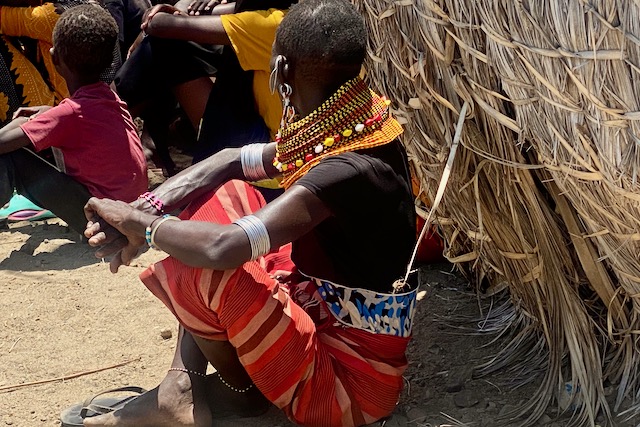
As we prepared to leave El Molo Bay, the transformation we had witnessed across all three villages was nothing short of miraculous. Over the course of our ministry, more than 90 El Molo men, women, and children had prayed to receive Jesus Christ as their Savior—souls who just days before had never heard the name of Jesus or known that freedom from spiritual bondage was possible. The atmosphere in each village had shifted palpably from suspicious hostility to warm welcome. Where we had initially encountered closed doors and cultural barriers, we now found eager questions about this Jesus who could heal the sick, cast out demons, and offer hope beyond the endless cycle of life-and-death balance that had defined their existence for generations. Children who had first approached us with cautious curiosity were now running to greet us with genuine joy. Adults who had initially viewed us as just another group of outsiders seeking to exploit their culture were now asking when we would return to teach them more. The same communities that had been trapped in spiritual darkness for centuries were now beginning to taste the light of Christ. Most remarkably, the chief himself—who had struggled with our presence from the very beginning—had softened considerably, especially after experiencing prayer for his chronic pain. The El Molo were no longer unreached, and the openness we now felt across all three villages gave us tremendous hope for the sustained discipleship work that lay ahead.
As our vehicle pulled away from the shores of the Jade Sea and we began the long journey south toward home, our hearts carried both the weight of what we had witnessed and the anticipation of what lay ahead. We were heading back to our “home waters”—the humble desert community that serves as the hub of all our ministry in Marsabit—where we would prepare for our annual soccer tournament in Nairibi. The contrast could not have been more striking—we were leaving behind the most remote ministry context we had ever encountered, where ancient spiritual practices had held sway for generations, and heading toward familiar territory to host hundreds of secondary students for Gospel outreach through soccer. From the isolated fishing villages of Lake Turkana to the desert fields near Nairibi, from ministering to a people group of 540 individuals to engaging with young athletes from across the region—the scope of God’s kingdom work never ceased to amaze us. The same Gospel that had penetrated the darkness of Komote Island would soon be proclaimed on soccer fields, reaching a completely different demographic with the same life-transforming message. As the kilometers passed beneath our wheels, we found ourselves already planning Peter’s return visits to the El Molo while simultaneously preparing for tournament logistics. This is the beautiful complexity of cross-cultural missions—the ability to be equally at home sharing Christ in the most remote corners of the earth and in the familiar rhythms of our established ministry base, knowing that in both contexts, hearts are equally hungry for the hope that only Jesus can provide.
From one man He made all the nations, that they should inhabit the whole earth; and He marked out their appointed times in history and the boundaries of their lands. God did this so that they would seek Him and perhaps reach out for Him and find Him, though He is not far from any one of us. Acts 17:26-27