

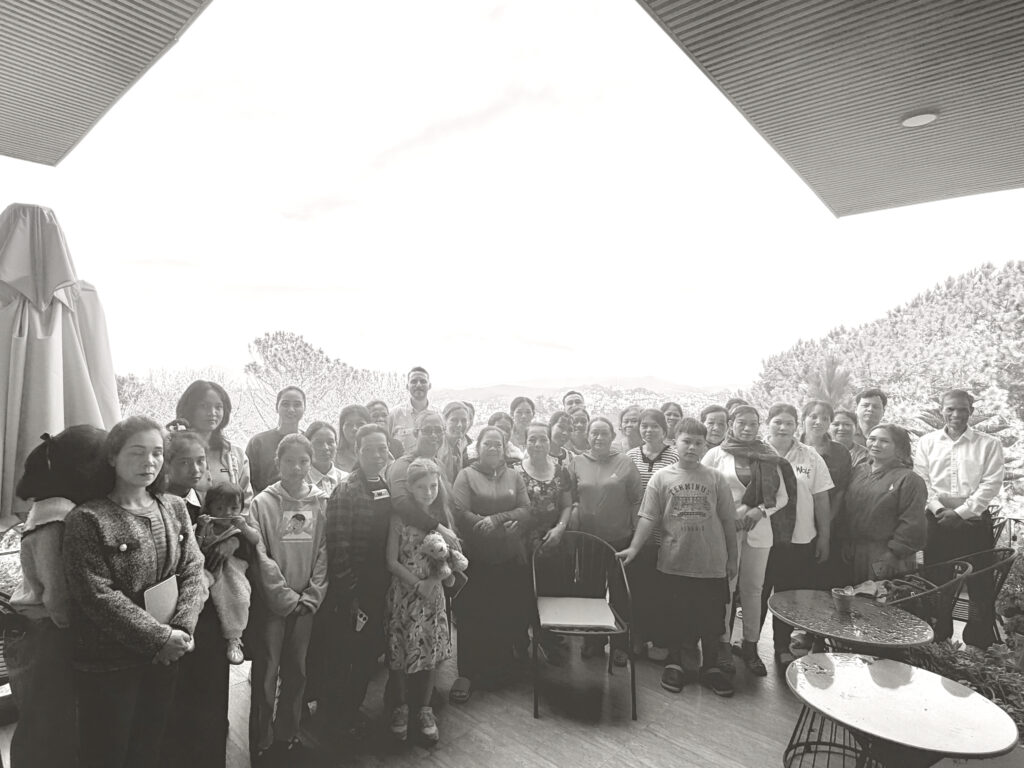
The fog was still sitting on the mountains when the women began arriving at Da Goc Nha.
Corner Stone Villa. A Christian-owned retreat center tucked into the highlands above Da Lat, the kind of place that feels — from the moment you step through the gate — like it was made for exactly this. Women came from Da Lat, from Dak Lak, from Saigon, from as far as Quang Ngai. Some had traveled through the night. Several had never left their province before. They arrived carrying bags and Bibles and the particular quiet of women who have made a significant sacrifice to be somewhere and are not yet sure what to expect.
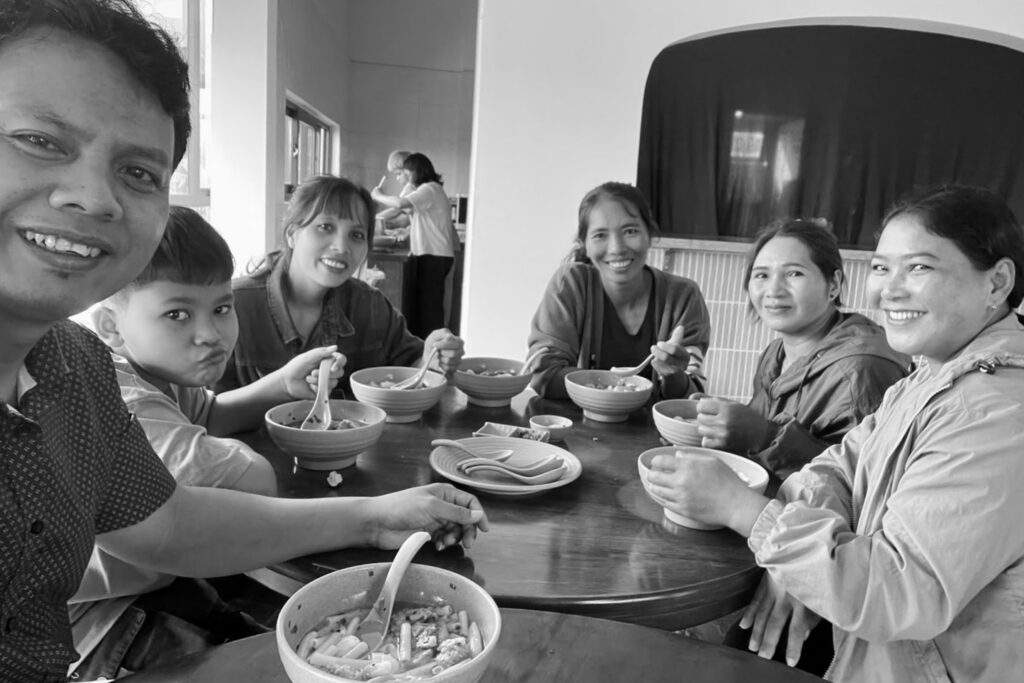
Within an hour, they were eating together.
This is where the ministry actually begins. Not with the first session, not with the opening prayer — with the table. Family style, shared plates, the room finding its voice in the particular warmth of women who are learning, meal by meal, that they are safe with one another. We have come to believe that what happens around the table is inseparable from what happens around the Word. You cannot shortcut the shared meal and then wonder why the small group feels guarded. Proximity is not the backdrop to what we do. It is the method.
We do not believe disciples are made at a distance. We never have. The model we have built — three days, one roof, every meal together, morning worship, evening conversation, the unhurried space between sessions where the real questions surface — is our attempt to create the conditions for the kind of nearness that makes transformation possible. Near enough, long enough. That is the phrase we keep returning to. It is not a program metric. It is a theological conviction.
The word for it, in the language of Ruth, is hesed — the love that does not leave when leaving would be the easier, more self-preserving choice. We did not set out to build a curriculum around that word. We built a gathering around it, and the curriculum followed. To live together for three days — to eat together, to worship together at six in the morning when no one is performing for anyone, to laugh together over translation errors and cry together when the Word lands somewhere that was already tender — is to practice, however briefly, the shape of the love that stays.
This week, God honored the practice.
At the close of each session, after the small groups have met and the women have had time to discuss the material together, we gather back as one group and invite several of the women to share what was spoken at their tables. It is always a meaningful time. This week, after Session 5 on Ruth, it became something we were not prepared for.
One of the women stood to share. She spoke — and when she had said what words could carry, she paused. What remained on her heart was larger than what language had been able to hold. She told the room that she wanted to express herself more fully, and that the only way she knew to do that was through song.
She began to sing quietly — a worship song, offered to God as an act of pure devotion. And then, one by one, other voices joined. What had begun as one woman’s private offering became something corporate — a spontaneous, unrehearsed chorus of thanksgiving rising from a room full of women who were, in that moment, simply grateful.
It was one of the most beautiful things I have witnessed in ministry.
And it was not without precedent. In our final session, we studied HANNAH — a woman who had carried a grief too deep for ordinary prayer, whose lips moved but whose voice could not be heard, and who, when God answered, broke into song. Her Magnificat — My heart exults in the Lord; my horn is lifted high (1 Samuel 2:1, ESV) — was the praise of a woman whose joy had outgrown the capacity of ordinary speech. And HANNAH’s song, centuries later, found its fullest echo in MARY: My soul magnifies the Lord, and my spirit rejoices in God my Savior (Luke 1:46–47, ESV).
The woman in that room this week was standing in a long and holy tradition. When the joy of what God has done becomes inexpressible, the faithful response has always been song.
The second moment is more difficult to write about — not because it is less significant, but because it is more tender.
Within Vietnamese culture, and particularly within the communities represented at this seminar, there is a weight of expectation around emotional restraint. To show deep feeling openly — to weep, to confess, to name what is breaking you — is often experienced as shame. Many of the women who came this week have been carrying burdens in silence for a long time. Burdens we cannot imagine. We have been praying, throughout the seminar, for a breakthrough in the small group times — for something to crack open.
I want to say carefully, because words feel insufficient: I have watched Iris lead her small group this week with a steadiness and a grace that I do not have adequate language to honor. It is one thing to observe your partner in ministry. It is another thing entirely to watch them do something beautiful. What an honor it has been. What a gift.
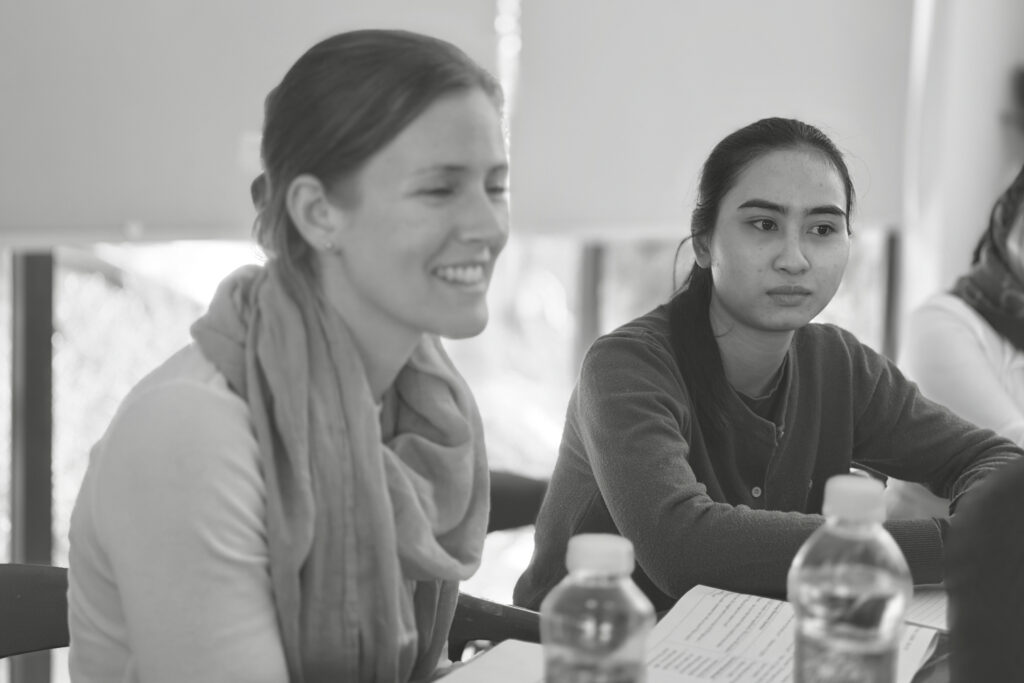
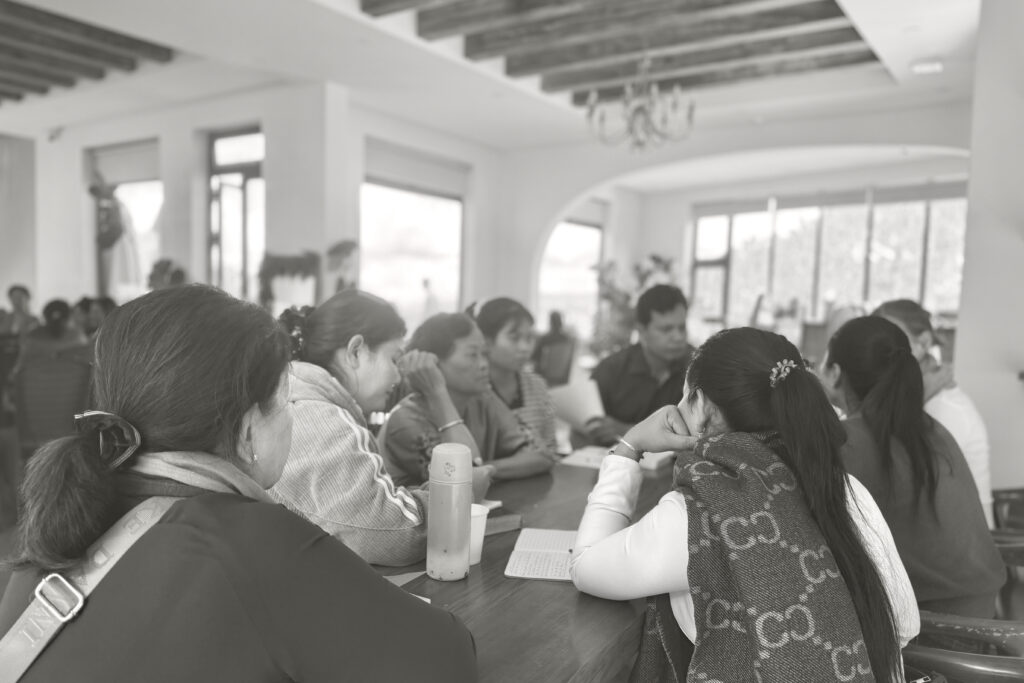
In Session 5, something shifted. RUTH’s story — the woman who stayed, the woman who chose costly proximity over comfortable distance — gave many of the women at Iris’s table permission to set down what they had been carrying. One by one, they began to speak. Testimonies that had never been spoken aloud. Griefs that had been held in silence for years. The kind of things you do not say unless you are somewhere safe, with people who will not leave.
By the end, the table was in tears. Not the tears of despair — the tears of release. Each woman sharing her private burden. Each woman being held in prayer by the others. The group that had arrived three days earlier as strangers from different provinces had become, in the space of an afternoon, something that looked very much like the Church.
This is hesed in practice. This is what it looks like when proximity creates the conditions for God to do what only He can do.
We do what we do because we believe the shape of God’s love is proximate. He did not call out to us from a distance and wait for us to close the gap. He put on flesh and moved into the neighborhood. He shared meals. He stayed. He was near enough, long enough, for the overlooked to become seen and the burdened to find rest.
We are only trying to follow His lead — to build, in whatever space we are given, the conditions in which that kind of nearness can happen again.
This week, in the fog and the pine forests and the shared meals and the unrehearsed song and the tears around a table in the highlands of Vietnam, it did.
Soli Deo Gloria.
In Christ,
Mathew, Iris & Vera Ruth
From one man He made all the nations, that they should inhabit the whole earth; and He marked out their appointed times in history and the boundaries of their lands. God did this so that they would seek Him and perhaps reach out for Him and find Him, though He is not far from any one of us. Acts 17:26-27